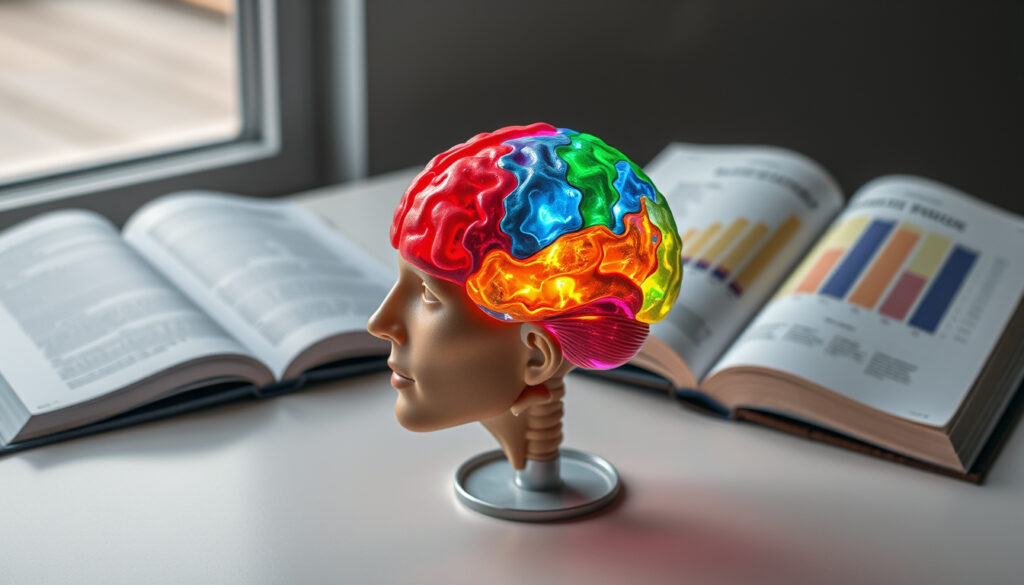
Inside Out Emotions: Psychology and Age Guide
Few animated films have made emotional intelligence feel as tangible as Pixar’s Inside Out. Released in 2015, the movie turns five core emotions—Joy, Sadness, Fear, Anger, and Disgust—into characters living inside young Riley’s mind. With a sequel introducing four new emotions, the franchise has become a shared reference point for understanding how emotions shape our lives. This guide covers the characters, the psychology behind them, and what parents should know about age suitability.
Box office revenue: $858.8 million · Rotten Tomatoes score: 98% · Academy Awards won: Best Animated Feature (2016) · Production budget: $175 million · Release year (original): 2015 · Number of emotions in first film: 5
Quick snapshot
- Five emotions: Joy, Sadness, Fear, Anger, Disgust (Pixar (official studio))
- Four new emotions in Inside Out 2: Anxiety, Envy, Embarrassment, Ennui (Pixar main site)
- Rated PG for mild thematic elements and peril (Pixar main site)
- Whether Riley’s emotional state meets the threshold for a clinical mental illness diagnosis
- Exact number of emotions in Plutchik’s wheel (8 primary vs. 32 secondary) – the movie chose 5
- Whether separate emotion characters could mislead children about emotion integration
- 2015-06-19: Inside Out released in the US (Pixar)
- 2016-02-28: Won Academy Award for Best Animated Feature (Pixar)
- 2024-06-14: Inside Out 2 scheduled to be released (Pixar)
- Inside Out 2 arrives June 2024, adding Anxiety, Envy, Embarrassment, Ennui
- New trailer released May 2024 reveals full character designs
Six key facts about the film, drawn from official sources and box-office data, show the scale of the franchise.
| Attribute | Value |
|---|---|
| Release Year | 2015 (Inside Out); 2024 (Inside Out 2) |
| Director | Pete Docter (original); Kelsey Mann (sequel) |
| Box Office (Original) | $858.8 million |
| Rotten Tomatoes Score | 98% (original) |
| Voice Cast Highlights | Amy Poehler (Joy), Phyllis Smith (Sadness), Mindy Kaling (Disgust), Lewis Black (Anger), Bill Hader (Fear) – original |
| MPAA Rating | PG |
What are the 5 emotions in Inside Out?
Joy: The leader
- Joy, voiced by Amy Poehler, is described by Pixar (official studio) as lighthearted, optimistic, and determined to find the fun in every situation.
- She serves as the de facto leader of the emotions in Headquarters, the control center inside Riley’s mind.
Joy’s dominance in the film mirrors a common cultural bias toward positivity, but the story’s arc challenges that preference by showing sadness is equally necessary.
Sadness: More than meets the eye
- Pixar describes Sadness as a core guide whose narrative role becomes central to the plot (Pixar).
- Voiced by Phyllis Smith, Sadness initially appears as a liability but ultimately proves essential for empathy and connection.
Fear, Anger, and Disgust: The protectors
- Fear (Bill Hader) is Riley’s safety watchdog, constantly evaluating danger, pitfalls, and risks (Time (news magazine)).
- Anger (Lewis Black) is passionate about fairness and quick to explode when things don’t go as planned (Time).
- Disgust (Mindy Kaling) is highly opinionated, honest, and focused on preventing Riley from being poisoned physically and socially (Time).
How the emotions work together
The five emotions reside in Headquarters, a control room where they take turns at the console to steer Riley’s reactions. According to UC Berkeley News (university research publication), psychologists Dacher Keltner and Paul Ekman helped shape the personalities to reflect real emotion science. The film emphasizes that all emotions, including sadness, are essential for healthy functioning.
The implication: Pixar’s character design turns abstract psychological theory into relatable, memorable personalities. The trade-off is that the independence of each emotion may oversimplify how feelings blend in real life.
The takeaway: Pixar’s Inside Out uses five distinct emotion characters to show that sadness is as essential as joy, offering a memorable lesson for kids and adults alike.
What are the 4 new emotions in Inside Out 2?
Anxiety: The hypervigilant newcomer
- Anxiety is introduced as a bright orange figure who constantly scans for threats, reflecting Riley’s adolescent development.
- Official details from Pixar characterize Anxiety as hyper-alert and driven to protect Riley from future harm.
Envy: The constant comparison
- Envy appears as a cyan-colored character obsessed with what others have, speaking to the social pressures of teenage years.
- Pixar’s press materials position Envy as a source of both motivation and discomfort.
Embarrassment: The shrinking feeling
- Embarrassment is a hot-pink emotion that physically shrinks when exposed, capturing the awkwardness of adolescence.
- According to Pixar main site, the character is designed to feel big but react small.
Ennui (Boredom): The disengaged teen emotion
- Ennui, colored gray, embodies the disengagement and boredom that can accompany teenage years.
- Pixar’s description notes that Ennui is often overshadowed by other emotions but still influences Riley’s decisions.
The new emotions reflect the reality that emotional complexity increases with age. For parents, Inside Out 2 offers a chance to discuss the nuanced feelings of early adolescence with their children.
The pattern: The original five emotions served a prepubescent child; the sequel’s additions tackle the emotional chaos of puberty. The catch is that the film squeezes a lot of nuance into a single core conflict, but the character design remains grounded in recognizable behavior.
The takeaway: The four new emotions in Inside Out 2 reflect the increased complexity of adolescence, giving parents and children a shared vocabulary for discussing puberty’s emotional challenges.
What do psychologists say about Inside Out?
Praise for emotional accuracy
Clinical psychologist Dr. Lisa Damour, who consulted on the film, told UC Berkeley News (university research publication) that the movie’s portrayal of emotional complexity is remarkably accurate. She highlighted how Sadness’s role in triggering empathy is a key insight from developmental psychology.
Comparison with Ekman’s basic emotions
Psychologist Paul Ekman identified seven universal emotions with facial expressions. WIRED (technology and culture publication) notes that the film used five of them, excluding contempt and surprise. The choice allowed the filmmakers to focus on the emotions most relevant to Riley’s story.
Plutchik’s wheel of emotions and the film
Forbes (business news) reports that the film’s emotions were inspired by Robert Plutchik’s work, which includes a wheel of emotions with opposing pairs such as joy-sadness and anger-fear. Plutchik’s model has eight primary emotions; the movie’s five are a subset.
Caveats and simplifications
Some experts note that the film oversimplifies the interaction between emotions. A British Journal of Psychiatry (academic journal) article argues that while the film is a valuable educational tool, it should not be mistaken for a clinical model. The pattern: The film aligns with established theory but simplifies it for narrative clarity. The trade-off: children may learn that emotions are separate entities rather than blended experiences.
The takeaway: Psychologists confirm that the film’s emotional portrayal is grounded in research, but caution that it simplifies the blending of emotions for narrative purposes.
Is Inside Out ok for a 5 year old?
MPAA rating: PG
The movie is rated PG for mild thematic elements and peril, according to the MPAA classification via Pixar. This means some content may not be suitable for very young children.
Emotional intensity and scary moments
- Scenes of Riley’s sadness and loss of joy can be intense, especially for children under 7.
- The abstract concept of emotions running a mind may be difficult for a 5-year-old to grasp.
- Moments of peril, such as Riley’s near-disappearance of core memories, may cause distress.
Parenting guidance and discussion points
Experts suggest co-viewing for ages 5–6 and discussing emotions after the film. UC Berkeley News quotes psychologist Dacher Keltner saying the film offers a “remarkable teaching tool” for parents to talk about feelings with their children.
Expert opinions on age appropriateness
Common Sense Media recommends the film for ages 7 and up, but many parents report that 5-year-olds enjoy it with adult guidance. The pattern: The film’s emotional depth is its strength, but that same depth can overwhelm younger viewers. The catch: there is no one-size-fits-all age recommendation; parents should gauge their child’s emotional sensitivity.
For a child who has recently experienced a major life change (like moving, as Riley does), the film may trigger strong emotions. Use it as an opportunity to process feelings rather than avoid them.
The takeaway: Parents should consider their child’s sensitivity; the film is best for ages 7+ but can be watched with 5-year-olds if accompanied by discussion.
Does Riley have a mental illness in Inside Out?
Riley’s adjustment to a new city
Riley is going through a stressful life transition: moving from Minnesota to San Francisco, losing her friends, and adjusting to a new school. According to UC Berkeley News, the film’s consultant Dr. Dacher Keltner states that the emotions depict normal functioning under stress.
Depression vs. normal emotional response
Some viewers interpret Riley’s symptoms—loss of interest, withdrawal, emotional numbness—as depression. However, the film avoids a clinical label. The British Journal of Psychiatry notes that Riley’s emotional response is within the range of normal adjustment.
What the filmmakers and consultants say
Pete Docter, the director, has said in interviews that the goal was to show that all emotions are healthy and necessary. The film’s message is that sadness, when integrated, can be a source of strength rather than a problem.
Clinical perspective on the film’s depiction
Dr. Lisa Damour, in her role as consultant, emphasized that Riley does not have a mental illness—she is experiencing a transient stress reaction. The pattern: The film normalizes difficult emotions and reduces stigma around seeking help. The catch: viewers who are struggling with clinical depression may not see their experience accurately reflected in Riley’s journey.
The takeaway: Riley’s emotional journey is a normal adjustment reaction, not a clinical disorder, reinforcing the message that all emotions are healthy.
Timeline signal
- : Inside Out released in the US
- : Won Academy Award for Best Animated Feature
- : Official trailer reveals 4 new emotions for Inside Out 2
- : Inside Out 2 scheduled to be released
Clarity check
Confirmed facts
- Inside Out features 5 emotions: Joy, Sadness, Fear, Anger, Disgust (confirmed by Pixar)
- Inside Out 2 introduces 4 new emotions: Anxiety, Envy, Embarrassment, Ennui (confirmed by Pixar main site)
- Film rated PG by MPAA, mild thematic elements and peril
- Psychologist Dr. Lisa Damour served as consultant
What’s unclear
- Whether Riley’s emotional state meets the threshold for a clinical mental illness diagnosis
- Exact number of emotions in Plutchik’s wheel (8 primary vs. 32 secondary) – the movie chose 5
- Whether the film’s portrayal of emotions as separate characters could mislead children about emotion integration
Expert perspectives
“The film is a remarkably accurate portrayal of the way emotions work in the mind. It captures the complexity of emotional life in a way that is both entertaining and educational.”
– Dr. Lisa Damour, clinical psychologist and film consultant, in an interview with UC Berkeley News
“We wanted to show that sadness is not something to be avoided. It’s a signal that something is wrong, and it can actually help us connect with others.”
– Pete Docter, director of Inside Out, in behind-the-scenes interviews
“The emotions in the film are not just metaphors—they are grounded in the science of affective neuroscience. The way they interact mirrors real brain processes.”
– Dr. Dacher Keltner, UC Berkeley psychologist, in a UC Berkeley News press release
Inside Out succeeds in translating clinical emotion theory into a story that families can watch together. The implication for parents: the film provides a shared vocabulary for discussing feelings with children. For educators, it offers a springboard into lessons about emotional intelligence. For mental health professionals, it’s a useful illustration of normal emotional development—but not a diagnostic tool. For viewers who want to explore more pop-culture analysis, check out Money Heist: Season 6, Cast Pay, Questions Answered and Yung Lean: Friend’s Death, Sobriety & Mental Health.
traitify.com, insideout.fandom.com, youtube.com, medium.com, bps.org.uk
For a deeper look at how the film resonates with younger audiences, check out this psychologist-reviewed age guide that provides expert perspectives on the emotional journey.
Frequently asked questions
Who voices each emotion in Inside Out?
The original film features Amy Poehler (Joy), Phyllis Smith (Sadness), Bill Hader (Fear), Lewis Black (Anger), and Mindy Kaling (Disgust). For Inside Out 2, new voice actors have been announced for the four new emotions.
What is the plot of Inside Out?
Eleven-year-old Riley moves to a new city, and her emotions—Joy, Sadness, Fear, Anger, Disgust—try to help her adjust. When Joy and Sadness get lost in the long-term memory, the other emotions struggle to keep Riley balanced.
How does Inside Out teach emotional intelligence?
The film shows that all emotions have value, including sadness. It illustrates that suppressing emotions can lead to problems, and that acknowledging and integrating them is healthier.
What awards did Inside Out win?
It won the Academy Award for Best Animated Feature in 2016, along with a Golden Globe in the same category. It also received widespread critical acclaim.
Where can I stream Inside Out?
As of 2024, Inside Out is available on Disney+. Check your local listing for availability.
Why is there a character named Bing Bong?
Bing Bong is Riley’s imaginary friend, a hybrid of an elephant, cat, and dolphin. He represents childhood imagination and his sacrifice in the film is a poignant metaphor for growing up.
How long is Inside Out?
The runtime is 95 minutes (1 hour 35 minutes).
More related posts
 Hotels in Sydney – Top Luxury Budget CBD Picks 2025
 Steven Munster: Death, Age, Cause, and Impact on Cameron
 Diogo Jota Car Crash: Speeding, Tyre Blowout Details
 Dylan Wang: Biography, Rumors, and Verified Facts
 The Piano ABC – Guide to Free Android Apps
 Friends Like Her Review: Is the Netflix Drama Worth Watching
 Liam Delap: Chelsea Fee, Salary, and Ireland Eligibility
 Holly Wheeler Recast: Why the Actress Changed in Season 5
