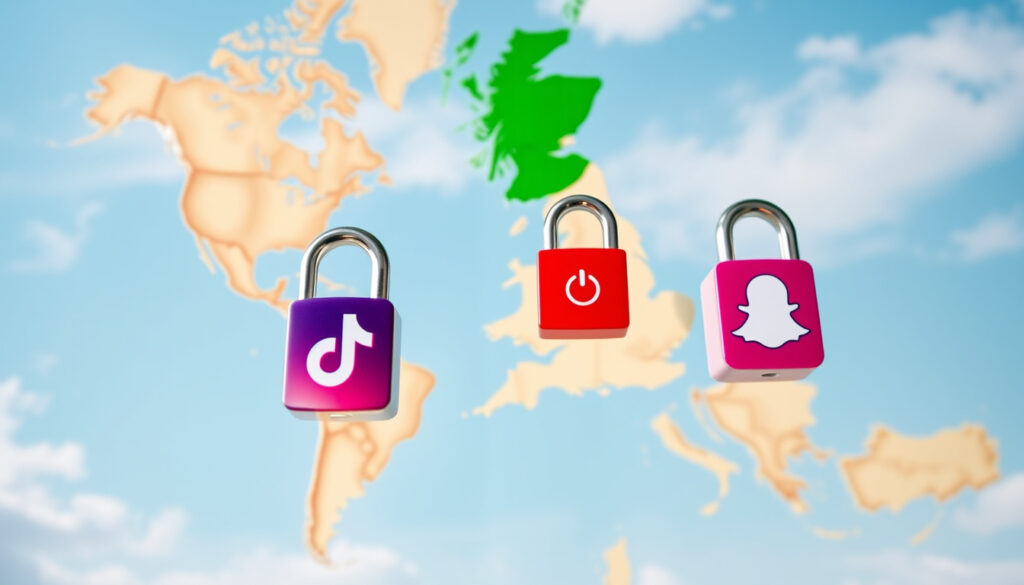
Social Media Ban: Ireland Under-16s, UK Plans & Global Updates
Governments across Europe and the Pacific are racing to restrict young people from social media — but the rules, timelines, and enforcement mechanisms vary wildly. Ireland’s under-16 proposal joins a growing list of nations wrestling with how to protect children online without simply pushing them into less visible corners of the internet. The Journal has been tracking these developments since late 2024, when Australia became the first country to actually enact such a ban.
Ireland Proposal: Under-16s restriction discussed ·
Denmark Plan: Ban under 15s from October ·
Age Verification Laws: Multiple countries enacted ·
Children’s Rights View: Opposes full ban
Quick snapshot
- Denmark planning under-15s ban (ABC News)
- Australia enacted world-first ban on December 10, 2024 (The Journal)
- UK Commons rejected immediate ban by 307-173 votes in March 2026 (The Journal)
- Ireland ban implementation timeline
- Full platform lists for each country
- Denmark’s exact enforcement mechanism
- Feb 2026: Ireland announced restrictions (The Journal)
- Oct 2026: Denmark announces under-15s ban (ABC News)
- Apr 2026: Denmark confirmed effective 2027 (The Journal)
- Ireland pilot trial expected in first half of 2026
- UK consultation closes May 26, 2026
- France enforcement targeted September 2026
Is social media getting banned in Ireland?
Ireland has proposed restricting social media access for users under 16 — but this is not an outright ban on any platform. The Irish government announced its approach in February 2026, framing it as a trial phase before any full legislation. Tánaiste Simon Harris cited public support, with a poll showing 75% of Irish respondents backing restrictions on children’s social media use.
The proposal sits within Ireland’s Digital and AI Strategy, which commits to exploring age restrictions under 16 alongside other EU states. Crucially, the government has explicitly stated no outright ban is planned. Instead, Ireland is pursuing age-verification technology using the MyGovID digital wallet, with a pilot program expected to launch in 2026.
Ireland’s approach could push younger users toward darker corners of the internet if platforms simply block access rather than providing safer alternatives.
Current status of the proposal
Ireland announced proposed restrictions in February 2026, planning a consultative panel on social media use and a youth assessment of what restrictions should look like. The government’s strategy involves coordinating with EU states on the issue, reflecting broader European Union momentum on the question.
- Trial program planned for first half of 2026
- MyGovID digital wallet for age verification
- No platform blackout planned — restrictions and verification, not bans
- 75% public support according to cited polls
Potential impacts on users
If Ireland’s pilot works as intended, users under 16 would face age verification checks before accessing social media platforms. The system would likely use existing digital identity infrastructure rather than requiring new documentation. Parents and guardians would have a role in verification for younger users.
Why is Ireland restricting social media for under-16s? And has it worked in other countries?
The push to restrict young people’s social media access stems from mounting concerns about mental health, reading skills, concentration, and online safety. Denmark’s Prime Minister Mette Frederiksen put it bluntly: social media was “stealing our children’s childhoods” and “letting a monster loose” on young people.
Ireland’s own Children’s Rights Alliance has pushed back against full bans, arguing that punishing children for tech giants’ failures misses the point. The alliance contends that restrictions should target platform design and harmful content, not simply block young people from accessing social spaces where many of their peers spend significant time.
Australia’s December 2024 ban targeted platforms including Facebook, Instagram, TikTok, and Snapchat, with fines up to Aus$49.5 million for violations — but enforcement remains uneven, with many teenagers simply using workarounds or accessing platforms through family accounts.
Reasons for restriction
Governments cite similar concerns across jurisdictions:
- Mental health impacts on young users
- Declining reading skills and concentration
- Exposure to harmful and inappropriate content
- Sleep disruption from late-night scrolling
- Data privacy concerns for minors
Evidence from other nations
Denmark proposed its under-15 ban on October 7, 2025, with Prime Minister Frederiksen announcing the government agreement on November 7, 2025. The proposal allows parental approval for 13-14 year olds, creating an exemption pathway. Enforcement could use Denmark’s national electronic ID system.
France passed legislation banning social media for under-15s pending Senate approval, with former Prime Minister Gabriel Attal hoping for Senate passage by mid-February 2026 to allow enforcement starting September 1. The French bill exempts encyclopedias, educational platforms, and WhatsApp.
The pattern: most European proposals target ages 15-16, allow some parental consent pathways, and focus on enforcement through age verification rather than platform removal.
What social media is going to be banned?
No country is banning social media outright — the measures focus on restricting access for minors rather than shutting down platforms. The specific platforms affected vary by jurisdiction, and enforcement mechanisms remain inconsistent.
Platforms affected in Ireland
Ireland has not published a final list of platforms that would fall under its proposed restrictions. The government’s approach emphasizes age verification requirements rather than a blacklist of specific services. This leaves considerable uncertainty for platforms and users alike.
Global examples
Australia’s enacted law gives the clearest picture of what platforms face restrictions. The December 2024 ban covers:
- Facebook and Instagram (Meta platforms)
- TikTok
- Snapchat
- X (formerly Twitter)
Australia exempted several platforms from the ban, including:
- Roblox (gaming platform)
- Discord (messaging)
- WhatsApp (Meta messaging)
- YouTube (video platform)
What Australia shows is that even a fully enacted law involves choices about which platforms restrict and which get exemptions. Ireland’s approach, still in development, will likely make similar distinctions.
Is social media being banned in the UK?
The UK rejected an immediate ban on social media for under-16s in March 2026, with the House of Commons voting against the proposal 307 to 173. This came after the Commons had earlier voted in January 2026 to approve such a ban — creating whiplash in the policy debate.
UK ministers have argued that an outright ban could have unintended consequences, potentially pushing young people toward less regulated online spaces. Instead, the government supported an amendment giving ministers powers to impose future restrictions on social media for children.
The UK launched a consultation on child social media bans closing May 26, 2026, which could reshape the landscape regardless of the March vote. The consultation considers raising the GDPR digital consent age from 13 — a move that would have significant implications for how platforms handle younger users across the EU and UK.
UK proposals overview
The UK’s current approach involves:
- Rejection of immediate under-16 ban (March 2026 vote)
- Government amendment preserving future restriction powers
- Active consultation on child social media ban
- Potential GDPR digital consent age increase from 13
Comparison to Ireland
Ireland and the UK are pursuing notably different paths. Ireland announced under-16 restrictions in February 2026 with a trial phase, while the UK rejected an immediate ban but is consulting on broader powers. Ireland’s approach involves age verification technology through MyGovID, whereas the UK’s consultation focuses on potential consent age changes.
The trade-off: Ireland’s cautious trial approach may produce better enforcement mechanisms, while the UK’s consultation-driven process could yield more comprehensive legislation — or could stall entirely depending on political winds.
Will TikTok still be available in Ireland?
TikTok is a central concern in the social media ban debate — it’s one of the platforms most heavily used by teenagers and has faced its own regulatory scrutiny across multiple countries. Ireland, as TikTok’s European headquarters location, has particular jurisdiction over the platform’s data practices.
Under Ireland’s proposed restrictions, TikTok would likely require age verification for users under 16 — similar to other major social platforms. This is not a full ban on the app but rather access restrictions tied to verified age.
TikTok specific impacts
TikTok has faced bans or restrictions in several jurisdictions beyond social media age laws:
- United States: ByteDance divestiture order (ongoing legal challenges)
- India: Full TikTok ban since 2020
- EU: Data protection investigations and fines
- Australia: Included in December 2024 under-16 ban
User workarounds
Across all countries attempting age restrictions, enforcement faces the same fundamental challenge: teenagers can use VPNs, borrow parents’ devices, or provide false age information. Australia’s experience shows that even the world’s first enacted under-16 ban hasn’t stopped determined young users from accessing platforms.
The implication: Ireland’s age verification pilot may reduce casual underage access, but comprehensive enforcement against motivated teenagers remains extremely difficult. Platforms face fines in Australia (up to Aus$49.5 million) yet users continue finding ways around restrictions.
Timeline of key developments
The following timeline tracks major social media age restriction events across multiple countries since late 2024.
| Date | Event | Source |
|---|---|---|
| December 10, 2024 | Australia enacts world-first under-16 social media ban | The Journal |
| October 7, 2025 | Denmark PM announces under-15 ban proposal | ABC News |
| November 7, 2025 | Denmark government agrees on under-15 ban | Wikipedia |
| November 26, 2025 | EU Parliament votes for minimum age 16 recommendation | Wikipedia |
| January 2026 | UK Commons votes to ban under-16s from social media | The Journal |
| February 2026 | Ireland announces under-16 restrictions | The Journal |
| March 2026 | UK Commons rejects immediate under-16 ban (307-173) | The Journal |
| April 8, 2026 | Denmark announces ban effective 2027 | Wikipedia |
| May 26, 2026 | UK consultation on child social media ban closes | Pinsent Masons |
What’s confirmed and what remains unclear
Confirmed
- Denmark planning under-15s ban, effective 2027
- Australia enacted world-first under-16 ban December 10, 2024
- Ireland proposed restrictions February 2026 with trial
- UK rejected immediate ban but consulting on future powers
- France passed under-15 bill pending Senate
- EU Parliament voted November 2025 for minimum age 16
- Digital age of consent varies by country (13-16)
Unclear
- Ireland ban implementation timeline and full platform list
- Denmark’s exact enforcement mechanism
- France Senate approval status post-February 2026
- UK consultation outcomes after May 2026
- How effectively age verification will work in practice
- Whether parental consent exemptions will function as intended
What officials are saying
“Social media was stealing our children’s childhoods.”
— Mette Frederiksen, Danish Prime Minister (ABC News report)
“The reality is that we have let a monster loose.”
— Mette Frederiksen, Danish Prime Minister (ABC News report)
“We hoped the Senate would pass it by mid-February so the ban would be in force September 1, with platforms required to deactivate accounts by December 31.”
— Gabriel Attal, Former French Prime Minister (The Journal article)
Summary
The global push to restrict young people’s social media access is accelerating, but implementation varies dramatically. Ireland’s under-16 proposal is more cautious than Australia’s enacted ban or Denmark’s under-15 law — focusing on age verification pilots rather than platform blackouts. The UK’s rejection of an immediate ban shows that parliamentary support remains uncertain even as public concern grows.
European governments face the challenge of protecting children from demonstrable harms while avoiding unintended consequences that could push teenagers toward less regulated corners of the internet. Ireland’s MyGovID pilot, if it succeeds, could provide a template — but Australia’s struggles with enforcement suggest technology alone will not solve what is fundamentally a social and regulatory problem.
Related reading: Facebook Marketplace Perth Guide · news.com.au Australia Top News
Australia has already enacted the groundbreaking Online Safety Amendment Act, prohibiting under-16s from social media accounts and setting enforcement timelines for platforms worldwide.
Frequently asked questions
What is the 30 30 30 rule for social media?
The 30-30-30 rule is a proposed framework suggesting children under 30 months old (2.5 years) should have zero social media exposure, and older children should have supervised access. It reflects growing concerns about early childhood development impacts from social platforms.
Why is Gen Z quitting social media?
Many Gen Z users report mental health concerns, anxiety, sleep disruption, and dissatisfaction with platform toxicity as reasons for reducing or quitting social media. Some are turning to private messaging apps and smaller community platforms instead of public social networks.
Which country banned social media for under 16?
Australia enacted the world’s first under-16 social media ban on December 10, 2024. The law covers platforms including Facebook, Instagram, TikTok, and Snapchat, with fines up to Aus$49.5 million for violations.
How many countries have banned social media for under 16?
No country has fully banned under-16s from social media as of early 2026. Australia has enacted a law with platform fines. Denmark, France, and Ireland have proposals at various stages. The EU Parliament voted for a minimum age 16 recommendation in November 2025.
Is there a social media ban in Australia?
Yes, Australia has an enacted under-16 social media ban that took effect in December 2024. It targets platforms like Facebook, Instagram, TikTok, and Snapchat. However, enforcement has proven challenging, with many teenagers finding workarounds through VPNs or family accounts.
What happens to TikTok app if banned?
Under current proposals, TikTok would require age verification rather than face a complete shutdown. Users under 16 (in Ireland’s case) or under 15 (in Denmark/France) would need to verify their age to access the app. Countries with full bans face enforcement challenges as users find workarounds.
Is Instagram banned for under 16s in Australia?
Instagram is included in Australia’s under-16 social media ban enacted December 2024. Meta-owned platforms (Facebook, Instagram) are among those covered. Users must verify they are 16 or older to maintain accounts, with platforms facing fines up to Aus$49.5 million for violations.
More related posts
 Steak Restaurant Melbourne – Top Picks for 2025
 Ray Hadley: Retirement, Return Speculation, Personal Life
 Jelly Roll Weight Loss 2026: Surgery, Mounjaro, Diet & Timeline
 Cash Only Diner – Reasons, Legality, Famous Spots
 Woolworths Everyday Rewards: Points, Value & Qantas Link
 Bay of Fires – Complete Guide to Australia’s Best Beach
 Zero Dark Thirty – True Story, Plot and Controversy
 Pizza Hut Voucher – UK Codes Deals and Savings 2025
