White Tail Spider – Facts, Bites and Safety Guide
White-tail spiders roam through homes across southern and eastern Australia, hunting in silence while carrying a reputation far deadlier than their actual threat. These nomadic arachnids, distinguished by the pale patch at their abdomen tip, generate fear disproportionate to their verified danger, largely due to decades of medical misattribution.
Contrary to widespread belief, prospective clinical studies have established that their venom does not cause necrotic ulcers. The spiders instead perform an ecological service, preying on other household spiders while maintaining populations without spinning capture webs.
Understanding their actual behavior, identification markers, and bite characteristics proves essential for residents, particularly during warmer months when human encounters peak.
Are White Tail Spiders Dangerous?
Lampona cylindrata and L. murina
Southern and eastern Australia
Low; painful but self-limiting
Causes necrosis (disproven)
- Zero necrotic ulcers developed in 130 prospectively studied definite bites
- Only 27% of confirmed bite victims reported severe pain
- Symptoms resolve within 24 hours for the majority of cases
- No infections developed in monitored clinical cases
- Both species produce identical clinical effects
- Venom lacks sphingomyelinases that cause tissue death in recluse spiders
- Evening and nighttime encounters increase during warmer months
| Aspect | Details |
|---|---|
| Body length | 12–18 mm |
| Primary species | Lampona cylindrata, L. murina |
| Distribution | Southern and eastern Australia |
| Habitat preference | Indoor environments, residential homes |
| Bite timing | Evening and night, warmer months |
| Pain incidence | 100% (severe in 27%) |
| Redness/mark incidence | 83% |
| Itchiness incidence | 44% |
| Systemic effects | 9% (nausea) |
| Necrosis occurrence | 0% (97.5% CI: 0–2.8%) |
| Median symptom duration | 24 hours |
| Symptom range | 1–168 hours |
How to Identify a White Tail Spider
Physical Characteristics
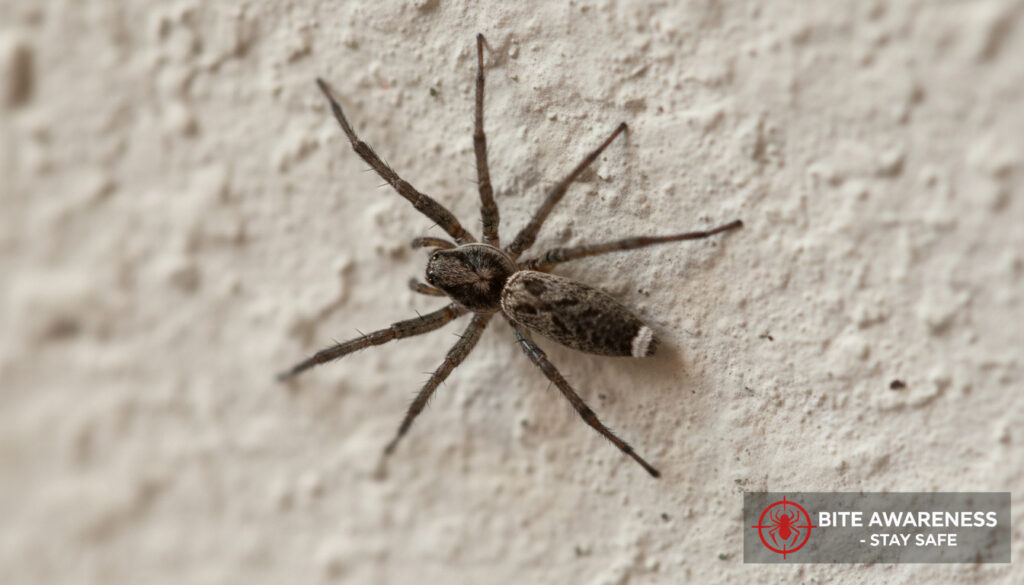
Adult white-tail spiders present flattened dark bodies with noticeably chunky legs. The definitive identifying feature remains the distinctive white patch at the abdomen tip, which contrasts sharply with their otherwise grey-brown to black coloration. They typically measure 12 to 18 millimetres in body length.
Distinguishing from Similar Species
They closely resemble black house spiders (Badumna insignis) but possess distinctly flatter body profiles and the characteristic caudal white spot. Unlike web-building spiders, they display an elongated, low-slung posture adapted for roaming rather than station-keeping. Museum specimens confirm these morphological markers remain consistent across both Lampona species.
The white patch at the abdomen tip distinguishes these spiders from similar household species. Unlike black house spiders, they possess noticeably flattened bodies and do not construct webs for prey capture.
White Tail Spider Bite Symptoms and Treatment
Clinical Presentation
Analysis of 130 confirmed bites reveals three distinct symptom patterns. Twenty-one percent experienced pain only without lasting marks. Thirty-five percent developed transient red marks resolving within 24 hours. The remaining 44% exhibited persistent painful or irritating red lesions lasting up to a week. Eighty-three percent of victims displayed redness, while 44% reported itchiness.
Systemic effects occurred in 9% of cases, primarily nausea. Severe pain affected 27% of bite victims. Medical guidance confirms these patterns remain localized and self-limiting.
Management Protocol
No specific antivenom exists. Treatment focuses on symptom management: application of ice reduces pain and swelling, while oral antihistamines address itching. Wound cleaning and observation for secondary infection remain standard practice.
Immediate medical attention is necessary if systemic symptoms develop, including severe headache, persistent nausea, or signs of anaphylaxis such as throat swelling or breathing difficulty. Any signs of infection at the bite site also require professional evaluation.
Clinical recommendations emphasize ruling out alternative causes such as bacterial infections or diabetic complications when ulceration appears, as these conditions share visual characteristics mistakenly attributed to spider bites.
Where White Tail Spiders Live and Their Behavior
Habitat Preferences
These spiders demonstrate strong synanthropic tendencies, preferring indoor environments across their southern and eastern Australian range. Activity increases during warmer months when they seek shelter inside residential structures. Unlike territorial web-dwellers, they roam widely across floors and walls, particularly in evening hours.
Their presence in urban environments extends from suburban homes to commercial accommodations. Travelers considering Hotels in Sydney – Top Luxury Budget CBD Picks 2025 may encounter these spiders in built environments, though outdoor excursions present minimal risk.
Predatory Ecology
White-tails function as active hunters rather than web-builders. Their primary prey includes black house spiders (Badumna insignis), which they track and subdue through direct attack. This predatory behavior naturally regulates other spider populations within human dwellings.
These spiders serve as natural pest controllers within homes, actively hunting and consuming other spider species. Their presence indicates a broader spider population rather than representing an independent infestation.
Behavioral studies confirm they do not build webs for prey capture, instead relying on speed and venom to subdue targets.
How Medical Understanding of White Tail Spiders Developed
- — Surge in skin necrosis reports attributed to white-tail bites without verified spider identification
- — Clinical reviews begin questioning the necrosis link due to lack of expert-confirmed specimens
- — Prospective study published in Medical Journal of Australia examining 130 definite bites with expert identification
- — Further analysis confirms minor effects and refutes major tissue damage claims
- — Medical consensus establishes low risk profile; health authorities update clinical guidance
Verified Facts and Persistent Uncertainties
| Established by Research | Not Fully Established |
|---|---|
| No necrosis in 130 confirmed bites | Long-term effects of rare severe reactions |
| Venom lacks necrotic enzymes (sphingomyelinases absent) | Comprehensive egg sac morphology descriptions |
| Median 24-hour symptom duration | Regional population density variations |
| Identical clinical effects from both species | Behavioral differences between L. cylindrata and L. murina |
| Primary habitat: indoor environments | Exact prey preferences beyond black house spiders |
Ecological Context and Human Coexistence
White-tail spiders occupy a specific niche within Australian urban ecosystems. As visual hunters that reject web-building for prey capture, they roam across floors and walls seeking other spiders. This nomadic behavior distinguishes them from the sedentary web-dwellers they consume.
Their presence in residential structures increases during warmer months when they seek shelter indoors. Unlike territorial species, they demonstrate continuous movement patterns, making encounters unpredictable yet typically brief. For travelers exploring natural environments like the Bay of Fires – Complete Guide to Australia’s Best Beach, understanding that these spiders prefer indoor habitats reduces concern during outdoor activities.
The persistence of necrosis myths despite contrary evidence reflects broader challenges in medical attribution, where skin conditions of bacterial or fungal origin were historically misdiagnosed as spider bites without specimen verification.
Research Foundations and Expert Analysis
All 130 definite bites caused pain or discomfort, with 83% showing redness or a red mark, 44% itchiness, and 17% puncture marks… No necrotic ulcers developed (97.5% CI: 0–2.8%).
— Medical Journal of Australia, 2003 Prospective Study
Unlike recluse spiders, white-tail spider venom does not contain the sphingomyelinases responsible for tissue necrosis.
— MiniBeast Wildlife, Venom Analysis
No Australian necrotic spider bites were verified in 750 cases reviewed between 1999 and 2001.
Safety Summary: Managing White Tail Spider Encounters
White-tail spiders pose minimal medical risk despite their fearsome reputation. Clinical evidence from 130 confirmed bites demonstrates that symptoms remain localized and self-limiting, typically resolving within 24 hours without necrosis. Proper identification—recognizing the white abdominal patch and flattened body—helps distinguish them from more dangerous species. When bites occur, standard first aid with ice and antihistamines suffices, with medical intervention reserved for rare systemic reactions. Whether residing in suburban homes or staying at Hotels in Sydney – Top Luxury Budget CBD Picks 2025, residents should view these spiders as ecological allies rather than threats.
Frequently Asked Questions
How common are white tail spider bites?
A prospective study identified 130 definite bites for clinical examination over the research period, indicating encounters occur regularly in southern and eastern Australian homes, particularly during evening hours in warmer months.
Do white tail spiders cause necrotic wounds?
No. Comprehensive prospective studies of 130 verified bites found zero cases of necrotic ulcers. Their venom lacks the enzymes responsible for tissue death seen in recluse spider bites.
Can white tail spiders jump?
Available research documentation does not describe jumping behavior in these species. They are ground-dwelling nomadic hunters that move quickly across surfaces.
What do white tail spider eggs look like?
Detailed morphological descriptions of egg sacs are not established in available clinical and biological research focusing on bite pathology and adult identification.
Are white tail spiders invasive?
They are not characterized as invasive species in available research. They represent established urban wildlife native to southern and eastern Australia.
Do white tail spiders die after biting?
Research provides no indication that these spiders die after biting. They can deliver multiple bites if provoked, though they typically retreat when encountered.
More related posts
 Terry Crews: Wife, NFL Career, Apology, Net Worth & More
 Bailey Brewing Co – Swan Valley Craft Beers and Location Guide
 Ahaan Panday: Age, Family, Debut Movie, and Relationship Rumors
 Anthony Seibold Sacked: What Happened and Where He Is Now
 Guy Ritchie Movies: Complete Filmography Guide
 Ray Romano: Heart Surgery, Net Worth & Career Update 2025
 Mafia: The Old Country – Release Date, Gameplay & FAQs
 Golden Retriever: Temperament, Health, Lifespan & Pros vs Cons
