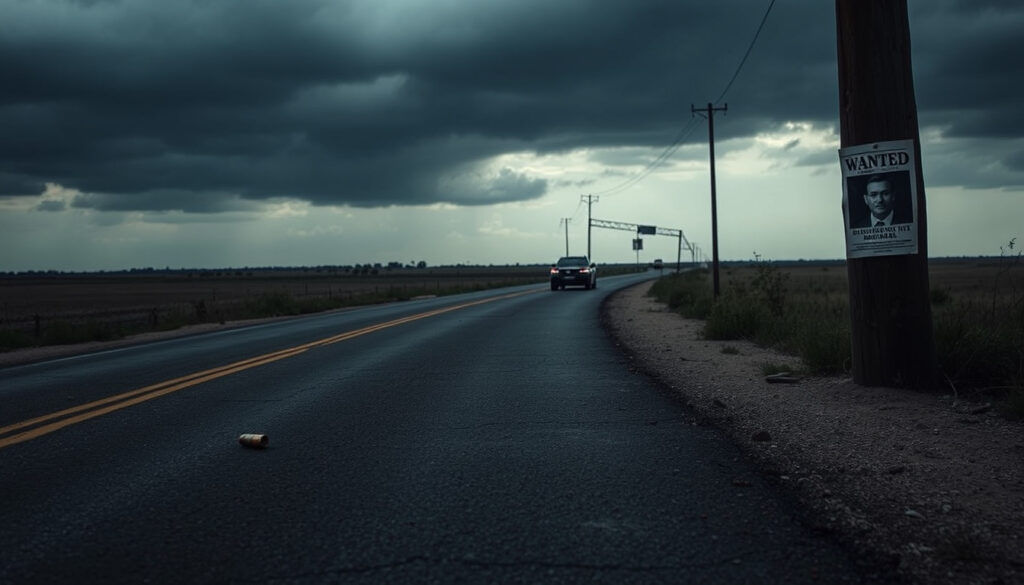
El Mencho Death: Who Killed the Most Wanted Cartel Leader
For nearly a decade, the most-wanted man in the Western Hemisphere was a former low-level trafficker who turned a regional gang into a transnational paramilitary force. Nemesio Rubén Oseguera Cervantes — El Mencho — was killed by Mexican special forces in Tapalpa, Jalisco, on February 23, 2026; within hours, his cartel answered with blockades and arson across several states. This is how he was finally taken, why his Jalisco New Generation Cartel became Mexico’s most feared organization, and what his death means for the war on drugs.
Full name: Nemesio Rubén Oseguera Cervantes · Alias: El Mencho · Cartel: Jalisco New Generation Cartel (CJNG) · Status: Killed by Mexican military on February 23, 2026 (reported)
Quick snapshot
- El Mencho died of wounds suffered during the raid in Tapalpa, Jalisco (Al Jazeera (international news outlet)).
- Six of his security guards were killed and three soldiers were wounded (BBC News (UK public broadcaster)).
- CJNG retaliation was reported in more than six Mexican states (Reuters (global news agency)).
- Who will lead CJNG after El Mencho.
- How deep the U.S. role in the raid went.
- 2020 — U.S. State Department offers $10 million reward (U.S. State Department (official government reward program)).
- February 23, 2026 — Killed by Mexican military (Al Jazeera (international news outlet)).
- Shelter-in-place warnings and travel disruptions in Jalisco (CNN (U.S. news network)).
- Pressure on President Claudia Sheinbaum to turn the operation into lasting security gains. (CNN (U.S. news network))
Six facts in one frame: his identity, his organization, the reward, and the date the manhunt ended.
| Attribute | Value |
|---|---|
| Full name | Nemesio Rubén Oseguera Cervantes |
| Alias | El Mencho |
| Cartel | Jalisco New Generation Cartel (CJNG) |
| Status | Killed by Mexican military on February 23, 2026 |
| Age at death | Approximately 59 |
| Bounty | $10 million US, $30 million Mexico |
Who took out El Mencho?
Mexican forces led the operation. American intelligence helped. The difference matters, because it shapes what happens next.
Military operation that killed El Mencho
- The operation was planned and executed by Mexican special forces with support from the National Guard, Air Force aircraft, the National Intelligence Center and the Attorney General’s Office (Justice in Mexico (UC San Diego research program)).
- U.S. intelligence supplied what Mexican authorities described as complementary information (BBC News (UK public broadcaster)).
- Reuters reported that a new U.S.-military-led task force played a role in the raid, while Mexican forces led and carried it out (Reuters (global news agency)).
Al Jazeera’s reconstruction of the assault describes an operation that had been building for days: authorities began surrounding a property in Tapalpa on February 20 after intelligence connected to an associate of one of El Mencho’s romantic partners, then moved in before dawn on February 22. El Mencho was seriously wounded and died while being transported by air toward Mexico City (Al Jazeera (international news outlet)).
The raid removed a leader, not the machine. CJNG’s cells were built to keep operating if El Mencho fell, and the succession fight is the real threat now.
Confirmation and reactions
The state confirmed the kill within hours; the cartel answered within the same window. That speed is the best measure of how institutionalized CJNG had become.
The reaction on the ground was immediate: burned vehicles, road blockades and attacks on businesses, concentrated in Jalisco and spreading into other states. President Claudia Sheinbaum said that peace, security and normalcy were being maintained across Mexico — a message that competed with the smoke from the blockade lines.
For residents, the practical warnings were blunt. Shelter-in-place notices and travel disruptions followed the announcement, a reminder that the manhunt’s end did not mean the violence would stop.
Impact on CJNG
- Leadership: unconfirmed.
- Structure: semi-autonomous cells.
- Immediate risk: a succession war.
The organization will not dissolve overnight. CJNG has operated as a federation of regional cells, and those cells have their own command layers, financing and weapons. The competition to replace El Mencho — or the attempt by several lieutenants to carve up his territory — is where the next wave of violence comes from.
What this means: a celebrated raid is not the same as a dismantled cartel. The security forces that killed El Mencho now have to hold the ground he controlled.
The operation’s success exposes the fragility of Mexico’s security strategy: high-profile kills create headlines but do not erase the networks beneath.
Why is El Mencho so feared?
His name was a weapon long before the raid made it a headline. The fear he generated was not an accident; it was a method.
Ruthless tactics of CJNG
- Under El Mencho, CJNG became known for extreme public violence — beheadings, dismemberment and mass killings — and for pioneering cartel drones and car bombs against security forces, while deliberately targeting police, mayors and journalists (InSight Crime (organized-crime analysis group)).
The effect was strategic. Visible atrocity forced communities into silence, pushed rivals out of towns and made informants think twice. Whole regions of Jalisco and its neighboring states lived under de facto CJNG rule, where the cartel, not the state, set the rules.
El Mencho’s personal history
- He started as a low-level trafficker in Michoacán and rose through the ranks of the regional gang that became CJNG (InSight Crime (organized-crime analysis group)).
His background matters. El Mencho was not the heir of an old smuggling family; he built his authority through discipline and violence, and his men’s loyalty was rooted in fear as much as in money.
Bounty and manhunt
U.S. reward: $10 million · Mexican reward: $30 million Mexico · Age at death: 59
For years the reward went unclaimed. El Mencho avoided the large, flashy operations that brought down earlier capos, moving between rural properties in difficult terrain. In the end, the trail ran through someone close to him: intelligence connected to an associate of one of his romantic partners helped lead the military to Tapalpa.
The pattern: a man who spent years avoiding capture was finally located not by firepower, but by the people closest to him.
His legend was built on brutality, and that brutality now belongs to whoever seizes control of CJNG’s cells.
Who was bigger, El Chapo or Escobar?
Size depends on the ruler: wealth, reach or sheer brutality.
Comparison of wealth and power
- Wealth: Escobar.
- Global reach: El Chapo.
- Military-style power: El Mencho.
Three cartel leaders, three peaks — wealth, reach and violence — and three very different endings.
| Drug lord | Cartel | Peak influence | End | Source |
|---|---|---|---|---|
| El Mencho | Jalisco New Generation Cartel (CJNG) | Transnational trafficking across Mexico, the U.S., Europe and Asia | Killed by Mexican military, February 23, 2026 | Reuters (global news agency) |
| El Chapo | Sinaloa Cartel | Global drug trafficking built on border tunnels and corruption | Extradited to the U.S.; sentenced to life in prison | Wikipedia (open encyclopedia) |
| Pablo Escobar | Medellín Cartel | Peak net worth estimated at $30 billion; at one point controlled most of the U.S. cocaine market | Killed in Medellín, 1993 | Wikipedia (open encyclopedia) |
The table shows why the comparison never settles cleanly. Escobar had the money, El Chapo had the distribution network, El Mencho had the paramilitary capacity. Each of those advantages translated into a different kind of terror.
Geographical impact
- Escobar’s war was urban: Medellín streets, car bombs, assassinations.
- El Chapo’s empire ran along border corridors and global shipping routes.
- El Mencho’s CJNG pushed beyond Mexico into Europe and Asia.
Geography decided strategy. Escobar fought the Colombian state in the open; El Chapo preferred to buy it; El Mencho tried to out-garrison it with armed cells. All three models ended the same way.
Legacy and capture
- Escobar: killed by security forces in 1993.
- El Chapo: captured, extradited, sentenced to life.
- El Mencho: killed before he could be tried.
The endings track the evolution of the drug war itself: from manhunt, to extradition, to a pre-dawn military raid.
The comparison shows that the drug war’s targets change but the pattern of state intervention remains consistent.
What is going on in Mexico with the cartels?
The short answer: a war over corridors, and the aftermath of El Mencho’s death is the latest front line.
Current cartel violence hotspots
- Jalisco, Michoacán and Guanajuato have concentrated the worst recent violence, as CJNG and its rivals fight over territory and smuggling routes (Justice in Mexico (UC San Diego research program)).
- The hours after El Mencho’s death showed how fast that violence can move: blockades, arson and business attacks reported across multiple states.
The hotspots are not random. These are the states where the Pacific drug corridors, regional production and weak local institutions overlap — which is also why the fight to replace El Mencho will land hardest there.
Jalisco is the cartel’s home base and the epicenter of the current unrest; the state’s corridors and municipalities are where CJNG’s next leadership will be decided.
Why cartels persist
- Profit: drug trafficking remains one of the most lucrative illegal markets in the hemisphere.
- Instability: killing and capturing leaders creates succession wars instead of dismantling networks.
- Local weakness: in many rural municipalities, armed groups act as the only authority.
Nothing in this cycle is accidental. As long as the revenue flows and institutions stay weak, the organizations regenerate — often faster than officials can issue victory statements.
The United States acknowledged supplying complementary intelligence for the operation, and President Sheinbaum has framed the kill as proof that Mexico’s security strategy is working. The harder question is whether the same intelligence and military capacity can be converted into everyday security for the people of Jalisco.
High-profile kills buy time and credibility, but leave the profit and corruption that grow cartels untouched.
The security forces that executed the raid must now prove they can hold the ground, which remains the hardest part of the drug war.
How many cartels are in Mexico’s map?
More than the public conversation assumes — but fewer than the viral maps suggest.
Major cartels list
- At least six major organizations dominate: CJNG, Sinaloa, Gulf, Los Zetas, Beltrán-Leyva and Knights Templar, plus dozens of smaller regional groups (Al Jazeera (international news outlet)).
- CJNG was the most expansionist of them before El Mencho’s death.
The map is not static. Alliances break over smuggling routes and local markets, and the death of a national leader usually redraws lines within months.
It produced the generations of traffickers who built the modern cartel system. But the center of gravity has shifted west, toward the Pacific coast states where CJNG made its stand.
The Golden Triangle region
- The Golden Triangle — the highlands where Sinaloa, Durango and Chihuahua meet — is the historic heartland of Mexican drug cultivation (Wikipedia (open encyclopedia)).
Any cartel map drawn today will be outdated by the succession war in Jalisco; watch the highways and agricultural valleys of Jalisco and Michoacán.
For most readers, the map matters for a practical reason: knowing where the violence is active. Right now the answer is Jalisco first, and the corridor states along the Pacific coast second.
The pattern: Mexican cartel maps are drawn in violence, not ink — and the blank space El Mencho left is the largest in years.
Key dates in El Mencho’s rise and fall
The table below marks the major milestones of his rise; his death on February 23, 2026 is covered in detail above.
| Date | Event | Source |
|---|---|---|
| 2009 | CJNG formed in Jalisco | Justice in Mexico (UC San Diego research program) |
| 2015 | El Mencho rises to leadership after the founder’s arrest | InSight Crime (organized-crime analysis group) |
| 2020 | U.S. State Department offers $10 million reward | U.S. State Department (official government reward program) |
The rhythm is consistent: each phase of El Mencho’s rise and fall lasted roughly half a decade, until the last one ended in Tapalpa.
What’s confirmed, what’s uncertain
Confirmed facts
- El Mencho is dead, killed during a Mexican military operation in Tapalpa, Jalisco (Reuters (global news agency)).
- Mexican special forces led the operation; U.S. intelligence provided complementary information (BBC News (UK public broadcaster)).
- CJNG cells retaliated with blockades, arson and attacks on businesses in multiple states (Reuters (global news agency)).
What’s unclear
- Who will lead CJNG after El Mencho’s death.
- How deep the U.S. role in the raid went.
- The exact sequence of events inside the raid, including how El Mencho was wounded.
- Whether the operation will translate into lasting territorial control.
The gap between confirmed facts and unclarities underscores the volatility of the situation.
What officials and analysts are saying
Two statements, hours apart, captured the gap between the state’s message and the street’s reality.
“…a major blow to the CJNG.”
“Peace, security and normalcy are being maintained.”
The gap between those two statements — official calm and street-level fire — is the real story of the days after El Mencho’s death.
For many Mexicans, El Mencho’s death is a genuine victory — proof that the state can inflict fatal damage on a group that had seemed untouchable. It is also a test. The cartel he commanded answered his killing within hours by paralyzing highways and burning businesses, and the succession fight has only begun. For President Claudia Sheinbaum, the choice is clear: convert a celebrated operation into lasting territorial control, or watch the next CJNG leader turn the same networks back into war.
The reporting for this story draws on material published in the first days after the operation. Some operational details — including the exact sequence inside the raid and the level of U.S. involvement — remain unconfirmed.
The coming weeks will reveal whether the state can hold the ground it gained with the raid.
Frequently asked questions
Is El Mencho alive?
No. El Mencho — Nemesio Oseguera Cervantes — was killed on February 23, 2026, during a military operation in Tapalpa, Jalisco, as detailed above. Mexican authorities confirmed the operation and international news outlets reported the death.
What is the US reward for El Mencho?
The U.S. State Department had offered $10 million through its Narcotics Rewards Program — the maximum reward the program allows (see the snapshot above). Mexico’s government listed its own reward as well.
Who killed El Mencho?
Mexican special forces planned and executed the raid (CNN (U.S. news network)). U.S. intelligence supplied complementary information, and Reuters reported that a U.S.-military-led task force played a supporting role — both covered in the operation section above.
What was El Mencho’s daughter’s role in the cartel?
Public reporting on El Mencho’s children has focused far more on his son than on his daughter. Legal details around his daughter have received less coverage, and much of the family’s court record is sealed or partial — so a precise picture of her role has not been established in the reporting used for this article.
How does CJNG compare to the Sinaloa Cartel?
CJNG under El Mencho was more openly militarized, using paramilitary tactics and extreme public violence. The Sinaloa Cartel has historically relied more on corruption, logistics and cross-border smuggling networks — a contrast laid out in the comparison table above.
What is the current status of the Golden Triangle?
The Golden Triangle — the highlands of Sinaloa, Durango and Chihuahua — remains the historic heartland of Mexican drug cultivation, though production and violence have spread to states like Michoacán and Jalisco, as covered in the cartel map section above.
Why is cartel violence increasing in Mexico?
Analysts point to turf wars over smuggling routes, the fragmentation of older cartels, and the succession vacuums created when leaders are killed or captured. The days after El Mencho’s death — blockades, arson and shelter-in-place warnings — were a live demonstration of that dynamic.
These questions reflect the most common concerns among readers following the story.
More related posts
 Eric Roberts: Family Rift, Medical History, Irish Roots
 Bay of Fires – Complete Guide to Australia’s Best Beach
 Find My: How to Track Devices and People on iPhone
 Dylan Wang: Biography, Rumors, and Verified Facts
 Bird of Paradise – Complete Care and Troubleshooting Guide
 Woolworths Everyday Rewards: Points, Value & Qantas Link
 Ahaan Panday: Age, Family, Debut Movie, and Relationship Rumors
 Brandon Smith charges: What happened to the Rabbitohs player
