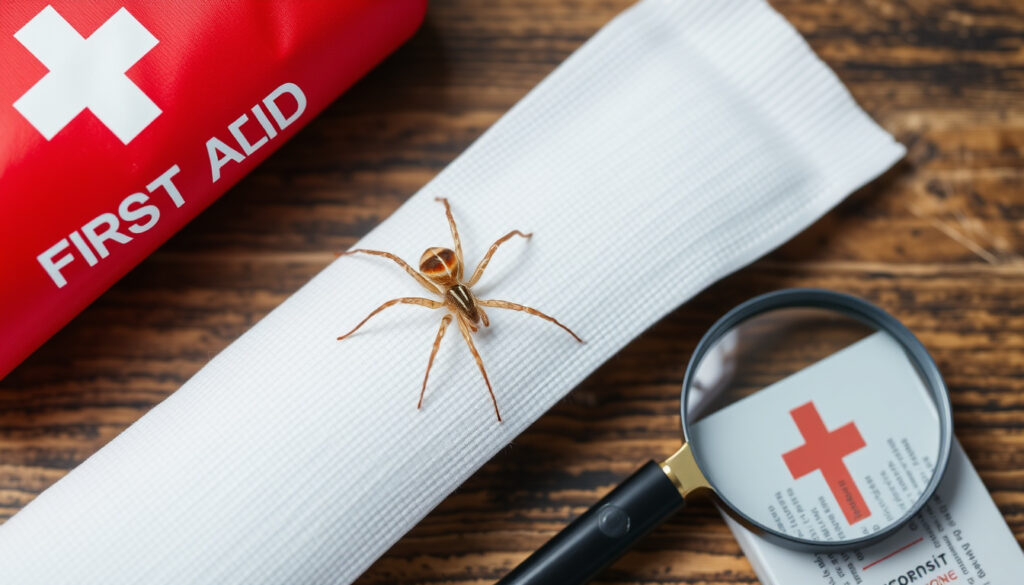
White Tail Spider Bite: Symptoms, Treatment & Healing Time
Old stories linked white-tail spider bites to flesh-eating ulcers, but modern studies show they’re far less dramatic. Here’s what you need to know about symptoms, first aid, and when to call a doctor.
Most common symptom: Localized pain at bite site ·
Systemic symptom rate: Occurs in about 10% of verified bites ·
Typical healing time: 1 to 7 days ·
Necrosis link (peer-reviewed): No confirmed cases in controlled studies
Quick snapshot
- Bite causes pain and local swelling (Healthdirect Australia (national health advice))
- No antivenom exists (Better Health Channel (Victorian government health service))
- Most bites resolve without complications (myDr (Australian health portal))
- Systemic symptoms occur in ~10% of cases (Mayo Clinic (US medical research))
- Whether white-tail spiders cause necrotic ulcers – evidence is contradictory (American Red Cross)
- Rate of secondary infection after bites (Healthdirect Australia)
- Effectiveness of specific treatments beyond general first aid (Mayo Clinic)
- Average symptom duration: ~24 hours (myDr)
- Some cases resolve in 1–2 hours; others last up to a week (myDr)
- Healing typically complete in 1–7 days (Healthdirect Australia)
- Clean bite area with soap and water (Better Health Channel)
- Apply cold pack for 15 minutes each hour (Mayo Clinic)
- Monitor for signs of infection or worsening (Healthdirect Australia)
Five key facts at a glance – from venom status to bite severity.
| Attribute | Value |
|---|---|
| Scientific name | Lampona cylindrata / Lampona murina |
| Native to | Australia and New Zealand |
| Venom confirmed necrosis | No in peer-reviewed studies |
| Bite severity | Mild to moderate pain |
| Antivenom available | No |
What happens when you get bit by a white-tail spider?
Immediate symptoms
- Sharp burning pain at the bite site – the most common symptom (Healthdirect Australia)
- Redness and swelling around the area (Better Health Channel)
- Visible puncture marks (myDr)
Delayed effects
- Nausea or headache in about 10% of cases (Better Health Channel)
- Itchiness at the bite site (myDr)
- Blisters may form, but not ulcers (Healthdirect Australia)
First stage appearance
- Typically a red mark or small lump that fades (myDr)
- No evidence of flesh-eating necrosis in verified bites (myDr)
Despite decades of anecdotal reports, no peer-reviewed study has confirmed that white-tail spider venom causes necrotic ulcers. The link is now widely rejected by Australian toxicologists.
How long does it take for a white-tail spider bite to heal?
Typical healing duration
- Average symptom duration is about 24 hours (myDr)
- Most bites heal completely within 1 to 7 days (Healthdirect Australia)
- Some people recover in as little as 1–2 hours (myDr)
Factors affecting healing
- Location of the bite – bites on limbs may heal slower (Mayo Clinic)
- Individual immune response (American Red Cross)
- Secondary infection from scratching or poor wound care can prolong healing (Healthdirect Australia)
When to follow up
- If redness spreads or pain increases after 48 hours, see a doctor (Mayo Clinic)
- If wound appears infected (pus, heat, red streaks) (Better Health Channel)
For the vast majority of patients, a white-tail bite is a minor event. The real risk isn’t the venom – it’s the secondary infection from scratching or misdiagnosis as something more serious.
What to do if bitten by a white spider?
Immediate first aid
- Wash the bite area with soap and water (Better Health Channel)
- Apply a cold pack wrapped in a thin cloth for 15 minutes each hour (Mayo Clinic)
- Elevate the affected limb if possible (American Red Cross)
- Take paracetamol or ibuprofen for pain (Healthdirect Australia)
Cleaning the wound
- Use mild soap and warm water (Better Health Channel)
- Apply antiseptic cream if available (Healthdirect Australia)
- Cover with a sterile dressing if the bite is oozing (Mayo Clinic)
Pain relief
- Over-the-counter painkillers like paracetamol or ibuprofen (Healthdirect Australia)
- Antihistamines can help with itching (myDr)
- Avoid cutting or sucking the wound – that increases infection risk (American Red Cross)
Home remedies like vinegar, baking soda, or poultices have no evidence behind them. Stick to soap, water, cold packs, and standard pain relief.
When to worry about a white-tail spider bite?
Red flags for medical attention
- Severe pain that is not relieved by over-the-counter medication (Mayo Clinic)
- Spreading redness, red streaks, or warmth beyond the bite area (Better Health Channel)
- Fever, chills, or body aches (Healthdirect Australia)
- Difficulty breathing, swelling of the lips or face (rare allergic reaction) (Mayo Clinic)
- If you are unsure whether the spider was a funnel-web or other dangerous species (Better Health Channel)
Signs of infection
- Pus or discharge from the bite (Healthdirect Australia)
- Increasing pain after 24 hours (Mayo Clinic)
- Swollen lymph nodes near the bite (Better Health Channel)
Systemic symptoms
- Nausea, vomiting, or abdominal pain (Better Health Channel)
- Rapid heart rate or difficulty speaking (Healthdirect Australia)
- If you have a known allergy to spider venom, seek emergency care (Mayo Clinic)
What are the signs and symptoms of a white-tail spider bite?
Common spider bite symptoms
- Redness, swelling, pain, itching, and visible puncture marks (Healthdirect Australia)
- Burning sensation at the site (Better Health Channel)
- Localised blistering (not ulceration) (myDr)
White-tail specific signs
- Pain is typically immediate and sharp (Healthdirect Australia)
- Swelling is usually mild and confined to the bite area (myDr)
- Necrosis (tissue death) is extremely rare; when it occurs, other causes should be investigated (myDr)
When symptoms indicate a different issue
- Bites from redback spiders cause intense, radiating pain and sweating (Better Health Channel)
- Funnel-web spider bites can cause salivation, muscle twitching, and breathing difficulty (Healthdirect Australia)
- If the bite looks like a target lesion or expands rapidly, consider bacterial infection (e.g., cellulitis) rather than spider venom (Mayo Clinic)
Myths and facts: What’s confirmed vs what’s unclear
Confirmed facts
- Bite causes pain and local swelling – backed by clinical studies (Healthdirect Australia)
- No antivenom exists – treatment is symptomatic (Healthdirect Australia)
- Most bites resolve without complications within days (myDr)
- Systemic symptoms (nausea, headache) occur in about 10% of verified bites (Better Health Channel)
What remains unclear
- Whether white-tail spiders can cause necrotic ulcers – evidence is contradictory and mostly from unverified reports (myDr)
- Actual rate of secondary infection after white-tail bites (Healthdirect Australia)
- Effectiveness of specific treatments beyond general first aid (Mayo Clinic)
“White-tail spider bites are often misdiagnosed because the spider is rarely seen. When a patient presents with a skin lesion and says ‘I think it was a spider,’ the default assumption is often white-tail, but in many cases the actual cause is something else entirely.”
Dr. Geoff Isbister, clinical toxicologist (Te Papa article)
“Based on currently available evidence, spider bites of any kind in Australia are very unlikely to cause skin ulcers or slow-healing wounds.”
myDr (Australian health portal)
The pattern is clear: white-tail spiders are not the medical menace folklore made them out to be. For Australians and New Zealanders, the takeaway is straightforward – most bites need basic first aid, and any severe wound should be investigated for causes other than spider venom.
Frequently asked questions
Are white-tail spiders aggressive?
White-tail spiders are not aggressive toward humans. They typically only bite when pressed against skin, such as when trapped in clothing or bedding. They are nocturnal hunters and prefer to flee rather than fight. (myDr)
Do white-tail spiders live indoors?
Yes, white-tail spiders are common inside homes across Australia and New Zealand. They often hide in dark corners, behind furniture, inside shoes, and under bedding during the day. They enter buildings in search of other spiders to eat. (Healthdirect Australia)
What does a white-tail spider look like?
White-tail spiders (Lampona cylindrata and Lampona murina) are slender, dark-bodied spiders with a distinctive white patch at the tip of the abdomen. They grow to about 1–2 cm in body length, with leg spans up to 4 cm. They are active at night and move quickly. (myDr)
Is there a home remedy for white-tail spider bite?
No evidence-based home remedy exists. The best approach is simple: clean with soap and water, apply a cold pack, and take over-the-counter pain relief if needed. Avoid cutting the wound, applying heat, or using vinegar, baking soda, or herbal pastes – these can irritate the skin and delay healing. (Healthdirect Australia)
Can white-tail spider bites cause allergic reactions?
Rarely, some individuals may experience an allergic reaction to white-tail spider venom, resulting in hives, swelling away from the bite site, or difficulty breathing. This is uncommon. If you develop any signs of anaphylaxis – swelling of the lips or throat, wheezing, or dizziness – seek emergency care immediately. (Mayo Clinic)
How to prevent white-tail spider bites?
Reduce contact by shaking out shoes, clothing, and bedding before use, especially if stored on the floor. Keep beds away from walls, avoid leaving clothes on the floor, and seal gaps around doors and windows. Regular vacuuming and removing clutter reduces spider habitats. (Better Health Channel)
Are white-tail spider bites common in children?
Yes, children are often bitten because they play on floors and may disturb spiders. However, bites in children are generally mild and follow the same symptom pattern as adults. Because children may not report the bite, look for sudden crying, limping, or pointing to a red area. The same first aid applies. (Healthdirect Australia)
What should I do if I find a white-tail spider in my house?
You can capture and release it outside using a jar and a piece of paper – white-tail spiders are not dangerous to handle with care. Alternatively, contact a pest control professional if the infestation is heavy. There is no need to panic. (myDr)
More related posts
 Wesley Snipes: What Happened? Prison, Tax Case, Career Comeback
 Josh Papalii: Career, Wife’s Assault Conviction, and Family
 Lily Santiago: Biography, Age, Movies, and Personal Life
 Vending Machine Ireland: License, Costs, and Profitability
 Car Battery Charger Guide: Charge a Dead Battery & Avoid Mistakes
 Casper Ruud: Wedding, Baby & Career Updates
 Jake Waterman: AFL star with Crohn’s disease, contract and family
 Ray Romano: Heart Surgery, Net Worth & Career Update 2025
