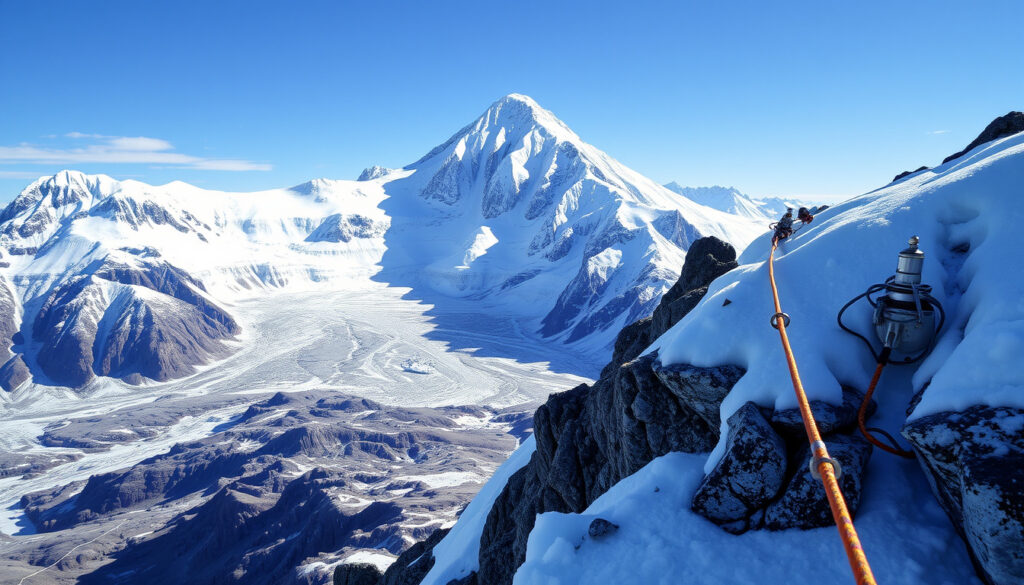
Mt Cook Climbing Guide: Difficulty, Safety, and Planning
Anyone who has stood at the base of Aoraki/Mount Cook knows the feeling: this mountain commands respect. This guide breaks down the technical difficulty, safety requirements, and practical logistics so you can decide if climbing Aoraki is within your reach.
Height: 3,724 m (Wikipedia) · Location: Aoraki/Mount Cook National Park, South Island, New Zealand (Department of Conservation) · Glacier coverage: 40% of the park (Department of Conservation) · First ascent: 1894 by Tom Fyfe, George Graham, and Jack Clarke (Wikipedia)
Quick snapshot
- Height: 3,724 m (Wikipedia)
- First ascent: 1894 (Wikipedia)
- Located in Aoraki/Mount Cook National Park (Department of Conservation)
- Glaciers cover 40% of the park (Department of Conservation)
- Exact difficulty comparison with Everest is subjective and route-dependent (National Geographic)
- Whether a beginner with no prior mountaineering can safely attempt a guided ascent (ClimbNZ)
- First ascent: 1894 by Tom Fyfe, George Graham, Jack Clarke (Wikipedia)
- No recent major climbing incidents reported in 2024–2025 season (Wikipedia)
- Best climbing season: November to February (Department of Conservation)
- Guided ascents available through Adventure Consultants
Six key figures define Aoraki/Mount Cook’s scale and setting, from its elevation to its glacial expanse.
| Label | Value |
|---|---|
| Height | 3,724 m (12,218 ft) (Wikipedia) |
| Location | Canterbury region, South Island, New Zealand (Department of Conservation) |
| Māori name | Aoraki (‘Cloud Piercer’) (Department of Conservation) |
| National Park size | 707 km² (Department of Conservation) |
| Number of glaciers | Over 70 (Department of Conservation) |
| Major glacier | Tasman Glacier (27 km long) (Department of Conservation) |
Is Mt Cook Harder Than Everest?
The simple answer: it depends on what you mean by “harder.” Everest’s challenge is altitude and logistics; Aoraki/Mount Cook’s is technical terrain.
Technical difficulty vs altitude
- Mount Cook involves climbing on ice, snow, and rock with a high level of glaciation, Adventure Consultants report.
- Everest’s standard route is less technically demanding but requires enduring extreme altitude (8,848 m) and weather, per National Geographic.
- Experienced mountaineers consider the overall difficulty comparable, though the specific challenges differ, National Geographic notes.
Key differences in climbing routes
- Mount Cook routes involve exposed ridges, steep ice, and rock pitches rated up to grade 8 (Wellington Tramping and Mountaineering Club).
- Everest’s South Col route is a non-technical snow climb with fixed ropes and oxygen support (National Geographic).
Why Mount Cook demands alpine skills
The difficulty is often underestimated ClimbNZ warns. Climbers need proficiency in crevasse rescue, ice axe arrest, and route-finding on glaciated terrain. Guided ascents require confidence scrambling over rough ground with hand placement for trips involving 300–500+ vertical metres and up to 8‑hour days (Alpine Guides).
The implication: choosing between them comes down to your personal risk profile and skill set, not just the peak’s reputation.
What Is the Closest Town to Mount Cook?
Mount Cook Village – the gateway
The only settlement at the mountain’s foot is Mount Cook Village (Department of Conservation). It sits inside the national park and provides accommodation, a general store, a visitor centre, and the Hermitage Hotel.
Getting to Mount Cook Village
- From Christchurch: ~3 hours via State Highway 8
- From Queenstown: ~4 hours via State Highway 6 and 8
- No airport; nearest major airports are Christchurch and Queenstown
Accommodation and services in the village
Options range from backpacker lodges to the Hermitage. Booking well ahead during peak season (November–February) is essential. The DOC visitor centre issues climbing permits and provides weather forecasts.
The pattern: Mount Cook Village is a compact, essential base for climbers and walkers, but be prepared for limited services outside summer.
Why Is Mt Cook So Famous?
Highest peak in New Zealand
At 3,724 m, Aoraki/Mount Cook is the country’s tallest peak (Wikipedia). It dominates the Southern Alps and is visible from both coasts on clear days.
Māori significance and the name Aoraki
In Māori tradition, Aoraki is a sacred ancestor who turned to stone. The name means “Cloud Piercer.” The mountain is the centrepiece of a UNESCO World Heritage area (Department of Conservation).
Part of a UNESCO World Heritage area
The national park (707 km²) is part of Te Wahipounamu, a World Heritage site recognised for its glaciated landscapes and biodiversity.
Why this matters: Aoraki’s fame is rooted in both natural superlatives and deep cultural heritage, making it a bucket-list destination for adventurers and culture seekers alike.
Is It Safe to Climb Mt Cook? And Can a Beginner Climb It?
Risks and challenges
- Fatalities have occurred from crevasses, avalanches, and rockfall (ClimbNZ).
- Weather can change rapidly; whiteouts are common.
- The Mueller Hut Route offers views of glaciers and ice cliffs but is a non‑summit walk (Department of Conservation).
Experience required
This is not a beginner climb. ClimbNZ states the mountain is “not a beginner-friendly objective.” Prior alpine experience including glacier travel, crevasse rescue, and roped climbing is essential.
Guided options for beginners
Guided ascents exist (Adventure Consultants), but they still require moderate fitness and scrambling competence. A complete beginner would need to build skills on easier peaks first.
Guided trips reduce but do not eliminate risk. You still need to be comfortable with exposure, 8‑hour days, and self‑arrest on steep ice. If you have zero mountaineering experience, start with Mount Ruapehu or a glacier skills course.
The trade-off: guided climbs make Aoraki accessible to determined intermediates, but true beginners should plan a year of training and lower‑altitude trips before attempting the summit.
How Many Days Do You Need in Mount Cook National Park?
Short visit: 1–2 days
- Day 1: Hooker Valley Track (3 hours return) – stunning glacier views.
- Day 2: Tasman Glacier Walk (lunch on the ice) and scenic flight.
Extended itinerary: 3–5 days
- Day 3: Mueller Hut Route (overnight: book bunk space in advance).
- Day 4: Guided glacier hike or climbing preparation.
- Day 5: Summit attempt (if experienced and weather aligns).
Best day hikes and glacier views
Top walks: Hooker Valley Track, Tasman Glacier View Track, and the Mueller Hut Route for a full‑day effort. All are accessible from the village without a car. The pattern: two days gives you the highlights; five days lets you commit to a summit bid or multi‑day traverse. Plan accommodation and hut bookings well ahead.
To help you decide which mountain suits your ambition, here is a side‑by‑side comparison of key factors.
| Factor | Mount Cook (Aoraki) | Mount Everest |
|---|---|---|
| Height | 3,724 m | 8,848 m |
| Technical difficulty | High (ice/rock/grad 8 pitches) | Low–moderate on standard route |
| Altitude risk | Low (no supplemental oxygen needed) | Extreme (oxygen essential) |
| Access / logistics | Easy (drive‑in national park) | Remote (trek to base camp, permit lottery) |
| Beginner suitability | Not recommended | Not recommended (extreme altitude) |
| Cost (guided) | ~$3,000–5,000 NZD | $35,000–100,000 USD |
| Season | Nov–Feb | April–May (Nepal side) |
Sources: National Geographic, Adventure Consultants, Department of Conservation.
Pros and Cons of Climbing Mount Cook
Upsides
- Technically rewarding alpine climb without extreme altitude
- Accessible location – drive to the trailhead from town
- World‑class glaciers and scenery
- Guided ascents available for aspiring mountaineers
- Lower cost and shorter logistics than Himalayan expeditions
Downsides
- High technical difficulty – not for beginners
- Fatal crevasses and avalanches are real risks
- Unpredictable weather can shut down attempts for days
- Limited hut space; booking needed months ahead
- No permit system – but self‑reliance expected
Weighing these factors will help you decide if this peak is right for you.
What We Know and What Remains Unclear
Confirmed facts
- Mount Cook is 3,724 m tall (Wikipedia)
- First ascent in 1894 (Wikipedia)
- National park is a UNESCO World Heritage area (Department of Conservation)
What’s unclear
- Exact comparison of technical difficulty with Everest is subjective and route‑dependent (National Geographic)
- Whether a beginner with no prior mountaineering can safely attempt a guided ascent (ClimbNZ)
These open questions highlight the need for careful preparation and current information.
Voices from the Mountain
Aoraki / Mount Cook involves technically challenging climbing with a high level of glaciation on ice, snow and rock. The difficulty is often underestimated.
— ClimbNZ (mountaineering route database, source)
Experienced mountaineers say the overall difficulty of climbing Everest and Aoraki / Mount Cook’s routes is comparable, but the challenges are different.
— National Geographic (adventure publication, source)
These expert opinions underscore the mountain’s unique challenges.
For aspiring mountaineers in New Zealand or abroad, the choice between a guided ascent of Aoraki and a Himalayan expedition is clear: Aoraki offers a technically demanding, accessible alpine challenge without the altitude extremes, but it requires serious preparation and respect for the terrain. The trade-off is real: you trade altitude for technical risk. For anyone short on time or budget but long on technical ambition, Aoraki is the harder mountain in the ways that matter most.
youtube.com, doc.govt.nz, reddit.com, instagram.com, en.wikipedia.org, facebook.com
Frequently asked questions
What is the best time of year to climb Mount Cook?
November to February (New Zealand summer) offers the most stable weather and extended daylight. Winter ascents are for experts only.
Do I need a permit to climb Mount Cook?
No permit is required, but you must register your intentions with the Department of Conservation (DOC) visitor centre and carry a personal locator beacon.
What gear is required for a Mount Cook climb?
Full alpine kit: ice axe, crampons, harness, ropes, helmet, glacier glasses, warm layers, waterproofs, and a headlamp. Rentals available in the village.
Are there any huts on the mountain?
Yes, DOC maintains huts at Mueller, Hooker, and other locations. Bookings are essential and fill quickly in the climbing season.
How long does a guided climb to the summit take?
Most guided trips are 3–5 days from the village, including training and acclimatisation. Summit day itself is 8–12 hours.
Can I see Mount Cook from Queenstown?
On clear days you can see the Southern Alps including Aoraki from Queenstown viewpoints, but it’s a distant view (about 130 km away).
What is the weather like in Mount Cook Village?
Mount Cook Village has a temperate alpine climate. Summer highs average 15–20°C; winter can drop below freezing. Conditions change rapidly – check the DOC forecast daily.
More related posts
 Morning After Pill: Timing, Access & Effectiveness Guide
 Journalist Heather Ewart: Career, Age, Personal Life
 Ronan Keating: Family, Health, Career & Net Worth in 2025
 Patrick Carrigan: Age, Salary, Girlfriend, Suspension & Biography
 Nike Jordan: Women, Men, 4, Low & Original Shoes in Ireland
 Mt Dandenong Guide: What to Do, Walks, Lookouts & More
 Machine Gun Kelly: Net Worth, Diagnosis, and Family
 Kinsey Schofield: From Reality TV to Royal Reporter
