Da Nang Vietnam – Essential 2025 Travel Guide
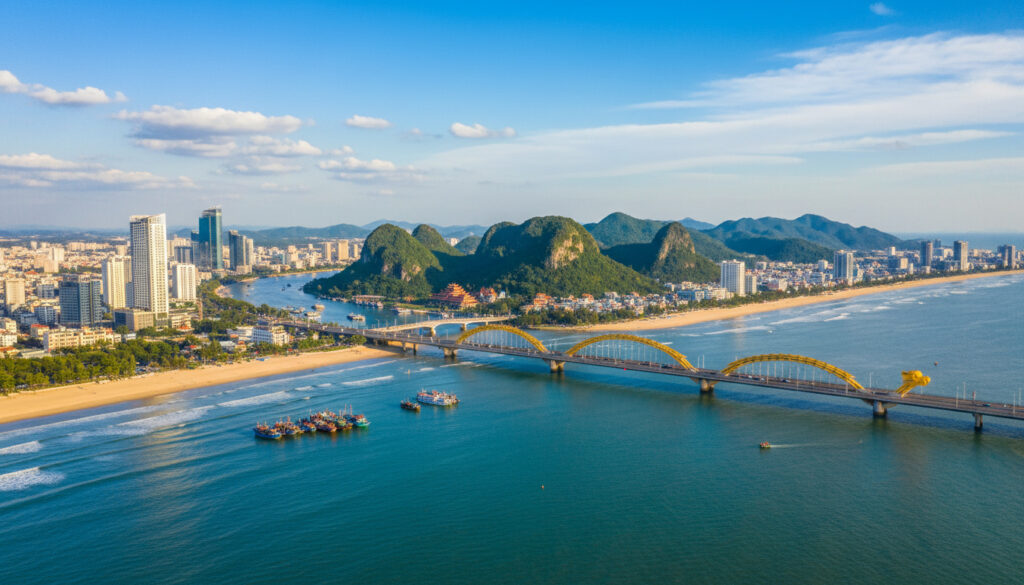
Da Nang stands as Vietnam’s rising coastal metropolis, bridging the ancient town of Hoi An and the imperial capital of Hue along the central coastline. The city synthesizes beachfront relaxation with mountain retreats, offering a distinct alternative to the frenetic energy of Hanoi and Ho Chi Minh City. Modern cable cars ascend through misty forests to golden walkways held by stone hands, while the Han River cuts through an illuminated downtown where steel dragons breathe fire on weekend evenings.
Once a strategic port during the mid-20th century, Da Nang has transformed into a streamlined tourism hub served by an international airport with frequent connections across Asia. The municipal infrastructure supports diverse itineraries, from morning swims at award-winning beaches to afternoon exploration of Cham Hindu sculpture and evening cruises past architecturally bold river crossings.
The following guide examines the essential components of a 2025 visit, mapping the geographic advantages, seasonal considerations, and logistical frameworks necessary to navigate this central Vietnamese destination effectively.
What is Da Nang Vietnam Known For?
Positioned roughly midway between Vietnam’s northern and southern poles, Da Nang functions as the gravitational center of the country’s narrow central waist. The municipality spans approximately 1,285 square kilometers, encompassing the Marble Mountains to the southeast and the Son Tra Peninsula to the northeast, while maintaining a western corridor toward the Ba Na Hills resort complex.
The city’s reputation crystallizes around several distinct pillars that separate it from neighboring provinces. These characteristics define visitor expectations and itinerary structures.
- Central Positioning: Acts as the logistical base for visiting both Hoi An Ancient Town and the Hue Imperial City within single-day excursions.
- My Khe Beach: Recognized internationally for soft sand and gentle surf, providing an urban beach experience minutes from downtown hotels.
- Dragon Bridge (Cầu Rồng): A 666-meter steel span that performs fire and water exhibitions every Saturday and Sunday at 9:00 PM.
- Golden Bridge Access: The cable car gateway to Chua Mountain’s hand-supported walkway and the surrounding French Village architectural reconstruction.
- Cham Heritage: Hosts the Museum of Cham Sculpture, preserving Hindu-influenced artifacts from the ancient Champa civilization.
- Aviation Connectivity: Da Nang International Airport (DAD) operates as a modern facility with direct domestic and regional international flights.
- Urban Safety Profile: Consistently described as clean, secure, and navigable for independent travelers, families, and senior visitors.
| Fact | Details |
|---|---|
| Geographic Coordinates | Approximately 16°N 108°E (Central Coast) |
| Primary Airport | Da Nang International (DAD) |
| Climate Classification | Tropical monsoon |
| Flagship Beach | My Khe Beach |
| Iconic Structure | Golden Bridge, Ba Na Hills |
| Weekly Event | Dragon Bridge fire/water show (Weekends, 21:00) |
| Nearby UNESCO Sites | Hoi An Ancient Town, My Son Sanctuary, Hue Monuments |
| Distance to Hoi An | 30–45 minutes by road |
| Currency | Vietnamese Dong (VND) |
| Optimal Visiting Months | February through May |
| Primary Language | Vietnamese (English common in tourism zones) |
| Local Transport | Grab, taxis, motorbike rental, bus services |
Top Things to Do in Da Nang
The municipal landscape compresses multiple tourism typologies into a compact footprint. Visitors typically circulate between three vertical zones: the coastal strip, the riverfront downtown, and the mountainous interior accessible via cable car infrastructure.
The Golden Bridge and Ba Na Hills Complex
Suspended 1,400 meters above sea level, the Golden Bridge (Cầu Vàng) consists of a 150-meter pedestrian walkway seemingly supported by two colossal stone hands emerging from the mountainside. Access requires a 20-minute cable car ascent from the Ba Na Hills base station, traversing primary forest and waterfalls. The summit area encompasses the French Village—a replica European architectural zone—alongside the Fantasy Park amusement center and Linh Ung Pagoda. Tour operators recommend allocating a full day to this complex to accommodate queuing and weather patterns.
Secure cable car tickets for Ba Na Hills in advance, particularly during the February–May high season. The Golden Bridge experiences significant congestion during mid-morning hours; arrival at the gondola base by 8:00 AM improves photography conditions and reduces waiting times.
Marble Mountains and Sacred Caves
Five limestone and marble outcrops rise abruptly from the coastal plain southeast of the city center, each named for an elemental force (Thuy, Moc, Hoa, Kim, Tho). Thuy Son (Water Mountain) contains the primary accessible cave systems and Buddhist sanctuaries, including Huyen Khong Cave and Linh Ung Ngu Hanh. The site overlooks Non Nuoc Stone Carving Village, where artisans continue traditional marble-working practices. Travel guides note the spiritual significance of the mountains predates modern tourism, functioning as pilgrimage destinations for centuries.
Dragon Bridge Show Times and Han River Viewing
The Dragon Bridge dominates the Han River skyline with its snake-like steel architecture. Each weekend, the structure performs a pyrotechnic display wherein the dragon head releases bursts of flame followed by water spray, synchronized with LED illumination changes. Shows commence at 21:00 on Saturdays and Sundays. Optimal viewing occurs from the Love Bridge pedestrian zone or riverside café terraces along Tran Hung Dao Street. Recent visitor reports confirm that arriving 30 minutes prior secures waterfront positioning during peak tourist periods.
My Khe Beach and Son Tra Peninsula
My Khe Beach extends for approximately 32 kilometers along the eastern city margin, characterized by fine sand and moderate surf suitable for swimming. Morning hours reveal local exercise routines and fishing net mending. To the north, the Son Tra Peninsula shelters the 67-meter Lady Buddha statue (Linh Ung Pagoda), which overlooks the East Sea and provides orientation markers for returning vessels. Coastal access points remain consistently clean, with municipal maintenance supporting the beach’s reputation among Asia’s premier urban shorelines.
Best Time to Visit Da Nang and Weather Guide
Tropical monsoon dynamics create distinct travel windows that significantly impact activity availability and comfort levels. The city experiences three primary meteorological phases annually.
Dry Season: February to May
The period from February through May delivers cool, dry conditions with minimal precipitation and moderate humidity. Meteorological data indicates this window offers optimal conditions for mountain cable car operations and extended beach exposure without afternoon storm interruptions. Average temperatures range between 25°C and 30°C.
Beach Season: June to August
Temperatures escalate during the northern hemisphere summer months, frequently exceeding 35°C with intense solar exposure. While rainfall increases marginally, the heat coincides with calm sea states ideal for swimming and water activities at My Khe and adjacent beaches. Crowding peaks during domestic school holidays.
Rainy Season: September to November
Autumn months bring the southwest monsoon, characterized by prolonged afternoon downpours and occasional tropical storm systems. Tourism operators generally advise avoiding this window, as mountain attractions may close during electrical storms and river levels can disrupt urban navigation.
How to Get to Da Nang and Where to Stay
Logistical accessibility reinforces Da Nang’s function as a central Vietnam base camp. The city integrates road, rail, and air networks that reduce transit friction for multi-city itineraries.
Arriving by Air and Ground Transport
Da Nang International Airport sits three kilometers from the city center, receiving direct flights from Hanoi, Ho Chi Minh City, and regional Asian capitals. Aviation schedules position the city as a key connector between Vietnam’s primary economic poles. Upon landing, taxi services and pre-arranged hotel transfers provide the most efficient city entry, though Grab ride-hailing operates extensively throughout the metropolitan area.
Within the city, Grab vehicles and traditional taxis offer metered transport between beach and riverfront districts. Motorbike rentals accommodate short-distance exploration, while the central train station provides north-south rail connections. Inter-provincial buses depart regularly for Hue and Quang Nam province.
Accommodation Zones
Lodging concentrates along two primary vectors: the My Khe Beach eastern corridor and the Han River western waterfront. Beachfront properties cater to sun-focused itineraries, while river locations provide proximity to night markets and the Dragon Bridge display. The hospitality infrastructure serves diverse demographics, including families requiring multi-bedroom configurations and solo travelers seeking boutique properties. Options range from international luxury chains to traditional guesthouses, though central locations near the river simplify airport transfers and day-trip departures. Travelers researching urban accommodation comparisons might review Hotels in Sydney – Top Luxury Budget CBD Picks 2025 for contrast with Asia-Pacific hospitality standards.
Day Trips and Proximity Calculations
The Hoi An Ancient Town lies approximately 30 kilometers south, accessible via coastal highway within 45 minutes. This UNESCO-protected settlement offers cooking classes at Tra Que Vegetable Village and cycling excursions through rice paddies. Hue’s Imperial City requires a full day commitment, traversing the Hai Van Pass—either by motorbike for panoramic coastal views or via the modern tunnel for time efficiency. The My Son Sanctuary, containing Cham temple ruins, sits inland from Hoi An and combines effectively with a Hoi An afternoon itinerary. Those interested in Asia-Pacific dining culture might reference Lucy Liu Restaurant – Melbourne Location, Not Toronto as a comparative study in regional restaurant scene development.
The Hai Van Pass occasionally closes during severe weather events between September and November. Verify road conditions before committing to motorbike transport to Hue during the rainy season.
Da Nang Development Timeline
The municipality’s evolution from maritime settlement to international tourism destination follows a distinct trajectory of infrastructural investment and cultural preservation.
- Pre-19th Century: Established as a fishing village and trading post within the Champa Kingdom, evidenced by Hindu architectural remnants preserved in the modern museum complex.
- 1960s: Functioned as a strategic military installation and deep-water port during the mid-century conflict, altering the urban fabric and population demographics.
- 1997: Granted official provincial city status, initiating administrative separation from Quang Nam and focused urban planning directives.
- 2018: Completion of the Golden Bridge at Ba Na Hills generated global media coverage, catalyzing a 300% increase in international arrivals over subsequent quarters.
- 2025: Current status as the primary tourism hub of Central Vietnam, with sustained investment in sustainable beach maintenance and cultural site preservation.
Established Facts and Persistent Uncertainties
While Da Nang’s tourism infrastructure provides reliable data for planning purposes, certain variables remain dynamic or undefined in official documentation.
| Established Information | Uncertain or Variable Information |
|---|---|
| Dragon Bridge fire shows occur every Saturday and Sunday at 21:00. | Specific population figures remain unspecified in recent municipal reports. |
| Dry season spans February through May with predictable precipitation patterns. | Exact typhoon landfall frequencies during September–November vary annually. |
| Distance to Hoi An is consistently 30–45 minutes by road. | Specific 2025 festival calendar dates beyond the weekly bridge shows remain unconfirmed. |
| Ba Na Hills cable car requires advance booking during high season. | Precise sustainability metrics for Son Tra Peninsula conservation are not publicly audited. |
Historical and Cultural Context
Da Nang’s identity derives from its position as the Cham civilization’s northern port, evidenced by the seventh-century sandstone sculptures housed in the Museum of Cham Sculpture. The Sa Huynh and Champa cultures utilized the natural harbor for spice and ceramic trade with maritime Southeast Asia, leaving a Hindu-influenced architectural legacy distinct from the Confucian and Buddhist traditions dominating northern Vietnam.
The twentieth century introduced significant American and French architectural influences alongside military infrastructure, creating a layered urban texture. Contemporary development emphasizes the contrast between the Son Tra Peninsula’s protected monkey populations and the high-density beachfront hospitality sector. This ecological and commercial balance positions the city as a test case for Vietnamese sustainable tourism, though explicit environmental protection protocols remain partially documented.
Sources and Expert Documentation
The following perspectives derive from established travel operators and regional tourism authorities with direct operational experience in Central Vietnam.
“Da Nang functions as the essential connector between Hoi An and Hue, offering modern infrastructure while maintaining proximity to UNESCO heritage sites. The 5-day itinerary allows integration of beach relaxation, mountain cable cars, and imperial history without transit fatigue.”
— Truong Sa Tour, 2025 Itinerary Planning
“The city’s central location on the Vietnamese coast makes it an ideal base for exploring the region’s cultural and natural highlights, with My Khe Beach providing immediate leisure access comparable to international resort standards.”
— Friends Travel Vietnam, Attraction Guide
Summary: Planning Your 2025 Visit
Da Nang offers a compressed geography where beaches, mountains, and cultural sites remain accessible within 30-minute transit radii. Visitors optimizing for weather should target February through May, securing Ba Na Hills cable car reservations well in advance. The city’s function as a transport hub simplifies multi-day excursions to Hoi An and Hue, while the Dragon Bridge weekend displays anchor the evening entertainment schedule. Those evaluating Asia-Pacific urban tourism may find Lucy Liu Restaurant – Melbourne Location, Not Toronto a relevant comparative dining reference, though Da Nang’s culinary identity remains firmly rooted in central Vietnamese street food traditions and riverfront seafood markets.
Common Questions
What are the top beaches in Da Nang?
My Khe Beach constitutes the primary coastal attraction, recognized for soft sand and gentle waves suitable for swimming. The beach supports morning exercise routines and offers clean municipal facilities along its 32-kilometer stretch.
Is Da Nang suitable for family travel?
Yes. The city maintains a reputation for safety and cleanliness, with hotel options catering to families, seniors, and solo travelers. Fantasy Park at Ba Na Hills provides specific child-oriented attractions.
How expensive is Da Nang compared to other Vietnamese cities?
Da Nang operates as an affordable destination with budget flexibility. Street food and local markets maintain low costs, while three-day itineraries accommodate mid-range budgets covering attractions, meals, and transport.
What is the Cham Museum?
The Museum of Cham Sculpture houses the world’s largest collection of Cham stone carvings and Hindu-influenced artifacts, preserving the cultural heritage of the Champa civilization that predated Vietnamese unification.
How far is Hoi An from Da Nang?
Hoi An Ancient Town lies approximately 30 kilometers south of Da Nang, accessible via a 30 to 45-minute drive along the coastal highway or organized tour transport.
More related posts
 Ahaan Panday: Age, Family, Debut Movie, and Relationship Rumors
 Jakara Anthony: Two-Time Olympic Gold Medallist in Moguls
 UK Shoe Size to Aus Converter: Women’s & Men’s Guide
 Buster Keaton: The Silent Star’s Life, Death, and Legacy
 Knights Game Today – Oilers Time TV Lineup
 Cristin Milioti: Bio, Career, and the Truth Behind the Rumors
 23 USD to AUD: Live Exchange Rate & Converter
 Qantas Premier Platinum – Benefits, Fees and Bonus Points
