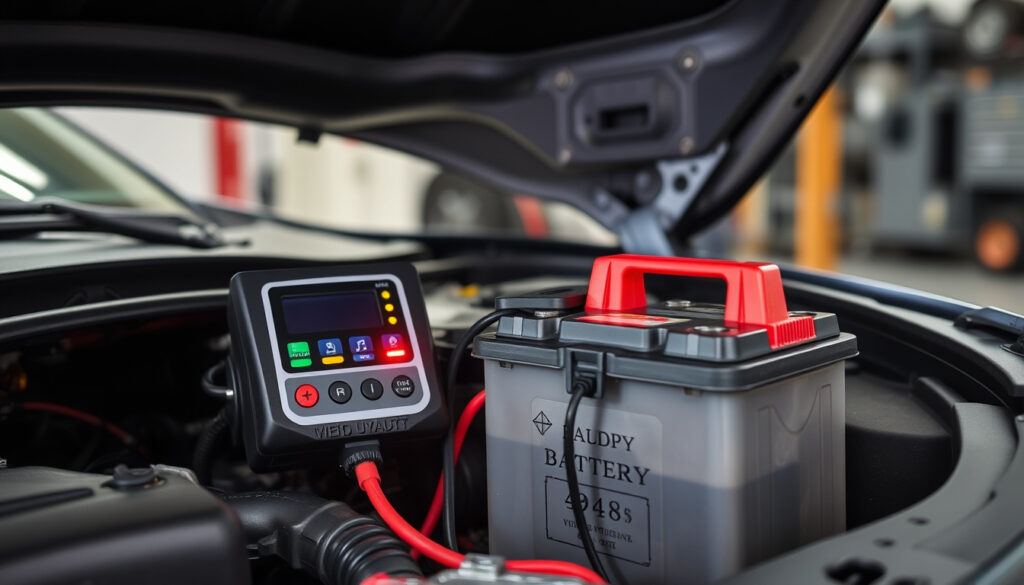
Car Battery Charger Guide: Charge a Dead Battery & Avoid Mistakes
Few things are as frustrating as turning the key and hearing nothing but a click. A dead car battery usually strikes at the worst moment, but with the right car battery charger you can bring it back to life safely and often avoid a costly replacement.
Average charge time for a dead 12V car battery: 12–24 hours · Typical charger output: 4–10 amps · Optimal charging voltage: 14.4V · Car battery lifespan: 3–5 years · Most common cause of battery failure: Sulfation due to prolonged discharge
Quick snapshot
- A 12V car battery can be recharged if not physically damaged or frozen.
- Smart chargers prevent overcharging and are safe for overnight use.
- Sulfation is the primary cause of battery failure when left discharged for weeks.
- Whether a completely dead battery (0V) can be revived without desulfation technology varies by battery age and damage.
- Exact charge time depends on many variables; estimates are guidelines only.
- A 4-amp charger on a 50Ah battery takes 12+ hours; a 10-amp charger takes about 5–6 hours. (Consumer Reports automotive team)
- Smart chargers adjust current and may take longer but prevent overcharging. (Consumer Reports automotive team)
- After a jump-start, the vehicle should run for at least 20 minutes to partially recharge (Consumer Reports automotive team).
- Test battery voltage after charging – a fully charged 12V battery reads 12.6–12.8V.
- Clean terminals and check for corrosion to prevent future issues.
- Consider a maintenance charger if the car sits unused for weeks.
| Label | Value |
|---|---|
| Average charge time for dead 12V battery | 12–24 hours |
| Typical charger output current | 4–10 amps |
| Optimal charging voltage | 14.4V |
| Car battery lifespan | 3–5 years |
| Most common battery killer | Sulfation from prolonged discharge |
Will a battery charger charge a dead car battery?
Yes, a standard car battery charger can recharge a dead battery unless it has physical damage or an internal short. Completely dead batteries (below 10.5V) may require a charger with desulfation mode or a significantly longer charging time. Charging a dead battery promptly reduces sulfation and prolongs battery life (Auto Batteries, a Battery Council International resource).
How to Charge and When to Charge for Maximum Battery Life
- Charge when voltage drops below 12.4V – this prevents deep discharge damage (AAA automotive service).
- Use a smart charger that automatically switches to maintenance mode once full.
- If the battery has been dead for weeks, try a desulfation cycle first.
Many drivers assume a jump-start fully recharges the battery. Consumer Reports warns that after a jump-start the car must run for at least 20 minutes just to get enough charge for the next start – it’s not a full recharge (Consumer Reports automotive team).
How long will it take a battery charger to charge a dead battery?
Charge time depends on battery capacity (Ah), charger output (amps), and discharge level. A 4-amp charger on a 50Ah battery takes 12+ hours; a 10-amp charger takes about 5–6 hours. Smart chargers adjust current and may take longer, but they prevent overcharging.
The implication is clear: if you need a quick charge, a higher-amp charger is tempting, but it can also stress an older battery.
Is it okay to leave a 12V battery on a charger all night?
Modern smart chargers with automatic shut-off or maintenance mode are safe to leave overnight. Older manual chargers risk overcharging, which can damage the battery and create explosive hydrogen gas (Car and Driver). Always follow manufacturer instructions; never leave a charger unattended if it lacks an auto-off feature.
If you use a manual charger, set a timer and disconnect as soon as the battery reaches full charge. Overcharging can boil electrolyte and permanently ruin a battery – a mistake many Irish drivers make with older chargers bought years ago.
What kills the car battery most?
Deep discharges and leaving the battery drained for long periods cause sulfation – crystals build up on lead plates and reduce capacity. Extreme temperatures accelerate chemical reactions and shorten lifespan. Parasitic drains (lights, electronics) slowly deplete the battery even when the car is off. Old age and vibration damage also contribute (Meineke car care).
In Ireland, where short journeys are common and winters are damp, batteries often fail because they never get a full recharge. A car driven only a few kilometres to work each day may demand more from the battery than the alternator can replenish – especially in cold weather. This is one reason models like the 2024 Toyota Kluger and Mazda CX-5 Ireland often see battery replacements sooner than expected in urban driving.
What are common mistakes when recharging batteries?
- Using a charger with too high amperage can overheat the battery.
- Connecting cables in wrong order risks sparks and damage – positive first, then negative (AAA automotive service).
- Charging a frozen battery or a battery with visible cracks is dangerous (Car and Driver).
- Ignoring battery water levels (on flooded lead-acid) can cause dry-out and failure.
The pattern: most mistakes come from rushing or using the wrong charger type. Taking ten minutes to read both the vehicle manual and the charger manual prevents the vast majority of dangerous situations (Meineke car care).
Five specs, one common thread: matching the charger to the battery chemistry and size is the single most important decision.
| Charger type | Typical amperage | Voltage | Key features | Best for |
|---|---|---|---|---|
| Trickle charger | 1–2 A | 12V | Low current, long-term maintenance | Storage, seasonal vehicles |
| Smart charger | 4–10 A | 12V (14.4V peak) | Automatic shut-off, multi-stage | General home use, overnight charging |
| Fast charger | 10–20 A | 12V | High current, short cycle | Emergency top-ups, workshops |
| Desulfator | 2–6 A | 12V | Pulse mode to break down sulfate crystals | Reviving old or deeply discharged batteries |
| Manual charger | 6–12 A | 12V/6V | No auto-off, analog meter | Experienced users, older vehicles |
| Portable jump pack | 300–1000 A (peak) | 12V | Jump-start only, built-in battery | Roadside emergencies |
How to Charge a Dead Car Battery: Step-by-Step
- Safety first – Wear gloves and goggles. Ensure the area is well-ventilated. Remove jewelry (AAA automotive service).
- Turn off and unplug the charger before connecting cables (Car and Driver).
- Connect positive clamp (red) to the battery’s positive terminal first (AAA automotive service).
- Connect negative clamp (black) to the battery’s negative terminal or a suitable ground point.
- Check connections – gently wiggle each clamp to ensure good contact (Meineke car care).
- Plug in the charger and select appropriate mode (if smart).
- Monitor progress – a fully charged 12V battery reads 12.6–12.8V. Disconnect when charging is complete.
- Disconnect in reverse order – remove negative clamp first, then positive (AAA automotive service).
- Start the car to confirm the charge works (Consumer Reports automotive team).
What We Know and What Remains Unclear
Confirmed facts
- A 12V car battery can be recharged if not physically damaged or frozen.
- Smart chargers prevent overcharging and are safe for overnight use.
- Sulfation is the primary cause of battery failure when left discharged for weeks.
What’s still unclear
- Whether a completely dead battery (0V) can be revived without desulfation technology varies by battery age and damage.
- Exact charge time depends on many variables; estimates are guidelines only.
- The long-term effectiveness of pulse desulfation on heavily sulfated batteries is not well documented in independent studies.
“The most important thing you can do for a car battery is to keep it fully charged. A smart charger is one of the best investments for extending battery life.” — Battery Council International
“A car that has been jump-started should run for at least 20 minutes to allow the battery to recharge before shutting it off.” — Consumer Reports automotive team
“When disconnecting a charger, the negative clamp should be removed first.” — AAA roadside assistance guidelines
For a driver in Ireland who relies on their car for short commutes and occasional longer trips, the choice is clear: invest in a decent smart charger from a retailer like Halfords or Lidl, charge at home overnight, and check the battery voltage every few weeks. Doing so can double the 3–5 year lifespan of a standard lead-acid battery and save the €100–€150 replacement cost. The alternative – waiting for the click of a dead starter on a wet Monday morning – is well worth avoiding.
If you’re wondering whether your old lead-acid charger will work with a new lithium battery, this lithium battery charger guide explains the key differences and safety considerations.
Frequently asked questions
Can I use a car battery charger on a motorcycle battery?
Yes, but only if the charger supports 12V and the output amperage is appropriate (typically 1–2 A for motorcycles). Many smart chargers have a motorcycle mode.
What is the difference between a trickle charger and a smart charger?
A trickle charger delivers a constant low current and must be manually disconnected. A smart charger monitors voltage and automatically switches to maintenance mode, making it safer for overnight use.
How often should I charge my car battery to keep it healthy?
If you drive less than 30 minutes daily, connect a smart charger once a month. For stored vehicles, use a trickle or maintenance charger continuously.
Do I need to disconnect the battery before charging it in the car?
You can charge with the battery still connected to the car’s electrical system, but it’s safer to disconnect the negative terminal first to avoid surges.
Can a car battery charger damage the alternator?
No – the alternator is designed to handle charging current. However, using a charger with excessively high amperage on a weak battery could stress the charging system.
What size charger should I use for a 12V car battery?
For most car batteries (45–70Ah), a 4–10 amp charger is ideal. Larger batteries (trucks, SUVs) may benefit from a 10–15 amp unit, but the charge rate should not exceed 20% of the battery’s Amp-hour rating.
More related posts
 Broadband Speed Test: Accurate Checkers for Ireland
 Han Jisung: Verified Biography, Key Facts, and Top FAQs
 Adairs Wall Art: Sizing Rules, Trends & What to Buy in 2026
 Rio Tinto: British-Australian Giant – Ownership & Profile
 Ronan Keating: Family, Health, Career & Net Worth in 2025
 Taylor Lautner: Ethnicity, Career, Wife, and Life After Twilight
 Noah Wyle: From ER Doctor to Advocate, 2025 Emmy Win
 Nikocado Avocado Weight Loss: Secret 250-Pound Reveal
