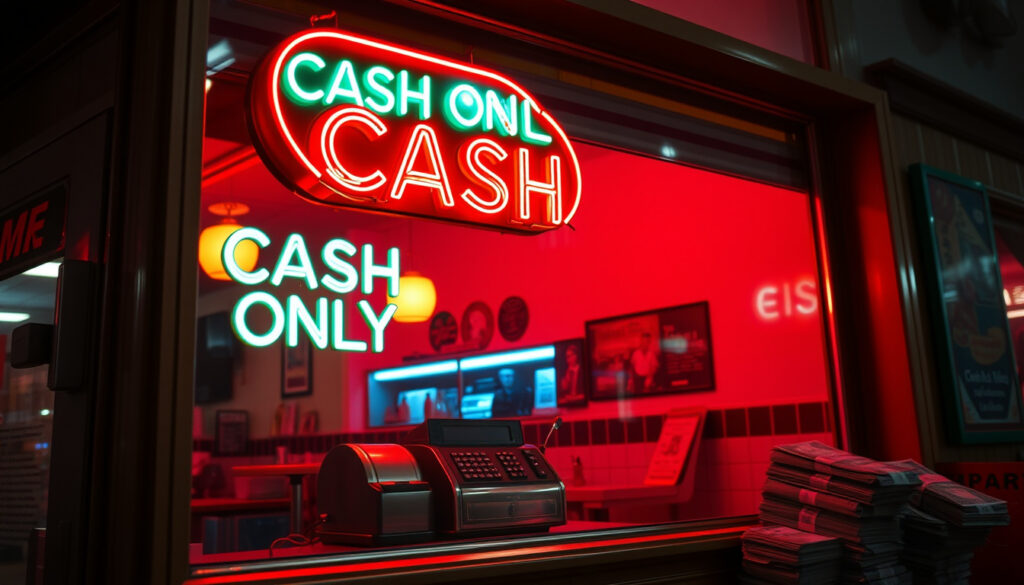
Cash Only Diner – Reasons, Legality, Famous Spots
For many diners across the United States, the phrase “cash only” remains a familiar reality rather than an inconvenience. These establishments operate without credit or debit card terminals, requiring patrons to pay with physical currency or alternative methods. The practice persists for straightforward economic reasons, despite broader societal shifts toward cashless transactions.
Understanding why some diners maintain cash-only policies requires examining the intersection of business economics, regulatory frameworks, and practical operations. From Philadelphia’s iconic roadside spots to neighborhood establishments in Cleveland’s dining scene, cash-only policies shape how these businesses manage their finances and serve customers.
Why Are Some Diners Cash Only?
The decision to operate without card payment capabilities stems primarily from financial considerations that directly impact a diner’s bottom line. For small-volume establishments, every percentage point saved on transaction fees represents meaningful revenue preservation.
Financial Impact of Credit Card Fees
Credit card processing fees typically range from 2% to 4% per transaction, according to industry reports from Cleveland-area dining coverage. For a diner serving hundreds of customers daily with average ticket sizes under $10, these percentages accumulate into substantial annual costs. A small establishment processing $500,000 in annual sales could pay $10,000 to $20,000 simply for the privilege of accepting cards.
Operational Simplicity and Speed
Eliminating card terminals removes equipment costs, monthly service fees, and potential technical complications from the operational picture. During peak hours at busy diners, the absence of card processing steps can reduce transaction times noticeably. TripAdvisor discussions about cash-only establishments frequently mention faster service as a secondary benefit alongside cost savings.
A diner processing $1,000 in daily sales at a 3% fee rate pays approximately $10,950 annually in credit card processing costs. Eliminating these fees can enable more competitive pricing while maintaining profit margins.
Overview: Cash-Only Business Model
| Reason | Benefit to Diner | Customer Impact | Example Location |
|---|---|---|---|
| Avoid credit card fees | Keeps 2-4% per transaction | May find lower prices | Philadelphia area |
| Faster transactions | Reduced wait times | Quicker service during busy periods | Cleveland diners |
| Lower overhead | No terminal equipment costs | Potentially more affordable menu items | Various urban locations |
| Cash flow certainty | Immediate fund availability | None—same transaction experience | Rural and urban alike |
Key Insights on Cash-Only Diners
- Processing fees of 2-4% per transaction represent a meaningful expense for low-margin businesses
- Small independent diners cite fee avoidance as the primary reason for cash-only policies
- The practice remains common in urban areas despite broader cashless trends
- Many cash-only establishments provide on-site ATMs as a customer convenience
- Some diners accept alternative digital payments like Cash App alongside traditional currency
- Church fish fries and school-run dining programs frequently operate on cash-only bases
- The model persists particularly among establishments with average checks under $10
Snapshot Facts
| Fact | Source Type | Implication |
|---|---|---|
| US law allows private businesses to set payment policies | Legal framework | No federal prohibition on cash-only |
| Credit card fees range 2-4% per transaction | Industry standard | Significant cumulative cost for high-volume sales |
| Some cities ban cashless merchants | Local regulation | Policy varies significantly by jurisdiction |
| Cash-only establishments often have on-site ATMs | Operational pattern | Workaround for customers without cash |
| Diners under $10 average check frequently cash-only | Business observation | Low-margin operations maximize every dollar |
Is It Legal for Diners to Be Cash Only?
The legality of cash-only policies varies considerably depending on geographic location. While no federal law prohibits private businesses from refusing card payments, several jurisdictions have enacted measures protecting consumers who rely on cash.
Federal and State Regulations
At the federal level, private businesses generally retain the right to establish their preferred payment methods. A diner owner may choose to operate without card terminals, provided they do not discriminate based on protected characteristics. This freedom reflects the contractual nature of commercial transactions, where both parties must agree to the terms of sale.
Cities With Cashless Merchant Bans
Beginning around 2019, several major cities implemented restrictions on cashless businesses to protect unbanked populations who lack access to credit and debit cards. New York City, Philadelphia, and San Francisco have enacted regulations requiring merchants to accept cash, according to travel and dining reviews documenting these policies.
Cash-only policies remain legal in most US jurisdictions where no local ordinance restricts the practice. Business owners considering this model should verify current regulations in their specific city and state, as enforcement of cashless bans varies.
What Remains Uncertain
Available research does not provide comprehensive data on pending legislation, ongoing lawsuits regarding cashless policies, or detailed statistics on enforcement actions. The regulatory landscape continues evolving as more municipalities consider protections for cash-dependent customers.
What Are Some Famous Cash Only Diners?
Several cash-only establishments have gained recognition for their food quality, historic character, and adherence to traditional payment practices. These spots demonstrate that the cash-only model can coexist with customer loyalty and positive dining experiences.
Philadelphia’s Dining Car
Perhaps the most well-documented cash-only diner, Philadelphia’s Dining Car has earned acclaim as an “old time” establishment serving affordable meals. Reviews note that complete lunches with grilled cheese and fries cost under $9, with the diner maintaining its cash-only policy through on-site ATM availability. The ATM charges approximately $2 per withdrawal, providing a practical workaround for customers arriving without physical currency.
Cleveland-Area Establishments
Cleveland’s dining scene includes several notable cash-only options. Charlie’s Dog House Diner accepts cash, checks, and digital payment apps including Cash App, demonstrating how some establishments have expanded beyond traditional currency while remaining card-free. Savour, operated by students at Polaris Career Center, offers reservation-only lunches on a cash-only basis, combining educational mission with real-world business practices. Parish fish fries, such as those at St. Mary of the Assumption, commonly require cash for both dine-in and takeout service.
Finding Cash-Only Diners Nearby
For those seeking cash-only dining experiences, local dining guides and travel review platforms often document establishments operating without card capabilities. Patrons frequently recommend bringing cash and locating nearby ATMs before visiting these establishments.
Travelers consistently report that checking whether an establishment is cash-only before visiting saves time and potential inconvenience. Most on-site ATM withdrawals carry fees of $2-5, making advance cash preparation the more economical choice.
Evolution of Payment Policies in Diners
- Pre-1980: Cash dominated all restaurant transactions as standard practice
- 1980s-1990s: Credit cards gained popularity; processing technology became more accessible
- 2000s: Debit cards expanded electronic payment adoption
- 2010s: Mobile payment options emerged alongside traditional card methods
- 2019: Several cities began enacting cashless merchant bans
- 2020s: Ongoing debates about financial inclusion and payment accessibility
- 2023: Continued enforcement of existing cashless bans in major metropolitan areas
What Is Verified Versus Uncertain?
| Established Information | Information That Remains Unclear |
|---|---|
| Private businesses may set cash-only policies in most jurisdictions | Exact percentage of diners operating cash-only nationally |
| Credit card fees range 2-4% per transaction | Comprehensive statistics on cash-only restaurant closures |
| Some cities prohibit cashless merchants | Details on pending legislation in various states |
| Cash-only diners often provide ATM access | Long-term trends in cashless ban enforcement |
| The practice remains common among small independent establishments | Impact of future federal regulation on payment policies |
Understanding the Economic Context
The persistence of cash-only policies reflects broader economic pressures facing small independent diners. Thin profit margins in the restaurant industry, combined with rising operational costs, create strong incentives to eliminate any expense that does not directly contribute to food preparation or customer service.
For many neighborhood diners, the customer base consists of regular patrons who understand and accept the cash-only arrangement. These establishments often serve populations that may not carry cards regularly or prefer the simplicity of paying with bills and coins. The establishment of alternative payment approaches in different restaurant contexts illustrates how the industry continues adapting to diverse customer needs.
Customer Workarounds
When visiting cash-only establishments, customers have developed practical strategies. Carrying small amounts of cash specifically for diner visits proves most economical, as ATM withdrawal fees typically exceed those at bank-owned machines. Some patrons use prepaid debit cards loaded with specific amounts, while others rely on digital payment apps when establishments accept them. The variety of payment solutions in the broader food and beverage industry suggests ongoing evolution in how customers and businesses handle transactions.
Industry Perspectives and Expert Commentary
“Cash-only reduces overhead significantly, allowing small establishments to compete on price while maintaining quality.”
Industry observers note that cash-only policies represent one aspect of a broader conversation about financial accessibility in dining. While some advocacy groups push for mandatory acceptance of electronic payments to include unbanked populations, others argue that business owners should retain autonomy over their payment infrastructure decisions.
“Diners operating on thin margins find every percentage point matters. Cash acceptance isn’t just about convenience—it’s about survival for many small operations.”
Summary
Cash-only diners persist across the United States primarily due to the financial burden of credit card processing fees, which can consume 2-4% of each transaction. While legal in most jurisdictions, this practice faces increasing regulation in cities like New York, Philadelphia, and San Francisco, where ordinances require merchants to accept cash. The model works alongside practical accommodations such as on-site ATMs, which charge modest fees for withdrawals. For consumers, understanding why some establishments operate this way—and planning accordingly—makes the dining experience smoother regardless of payment preferences.
Frequently Asked Questions
Why do some diners only accept cash?
Diners often operate cash-only to avoid credit card processing fees, which can range from 2-4% per transaction. For low-margin businesses, these fees accumulate significantly over high-volume sales, making cash acceptance a financial strategy rather than an inconvenience.
Can I find cash-only diners near me?
Local dining guides and travel review platforms often document cash-only establishments. Many cities have neighborhood diners operating without card capabilities, though the prevalence varies by region and urban versus rural setting.
What should I do if I arrive at a cash-only diner without cash?
Many cash-only establishments provide on-site ATMs, though these typically charge withdrawal fees of approximately $2-5. Locating a nearby bank ATM before your visit generally results in lower fees than on-site machines.
Do cash-only diners offer lower prices?
Some cash-only diners pass their processing fee savings to customers through competitive pricing. However, this varies by establishment, and price differences between cash-only and card-accepting diners depend on multiple factors beyond payment policy.
Are cash-only policies becoming less common?
While cashless transactions increase overall, cash-only policies remain common among small independent diners, particularly those with lower average checks. Some cities have banned cashless merchants entirely, while others maintain permissive regulatory environments.
What payment alternatives do cash-only diners sometimes accept?
Beyond traditional currency, some cash-only diners accept checks, digital payment apps like Cash App, or church-specific platforms like Tithely. These alternatives vary by establishment and typically exclude major credit and debit card networks.
Is it rude to ask if a diner accepts cards before visiting?
Asking about payment methods before visiting any restaurant represents practical planning rather than rudeness. Many establishments clearly display their payment policies, but confirming in advance prevents inconvenience upon arrival.
More related posts
 Casper Ruud: Wedding, Baby & Career Updates
 Is Jal Airlines a Good Airline? Safety, Cost & ANA
 Emma Memma: Why She Left The Wiggles, Wig & Husband
 Soda Pop Dance – Beginner Tutorial and Origin Guide
 Joe Jonas Divorce Sophie Turner: Reasons, Custody & Timeline
 Helen Hunt: Accident, Hearing Loss, and Career Update
 12V Air Fryer – Best Portable Models for Cars RVs
 Zoe Daniel: From ABC Journalist to Teal Independent MP
