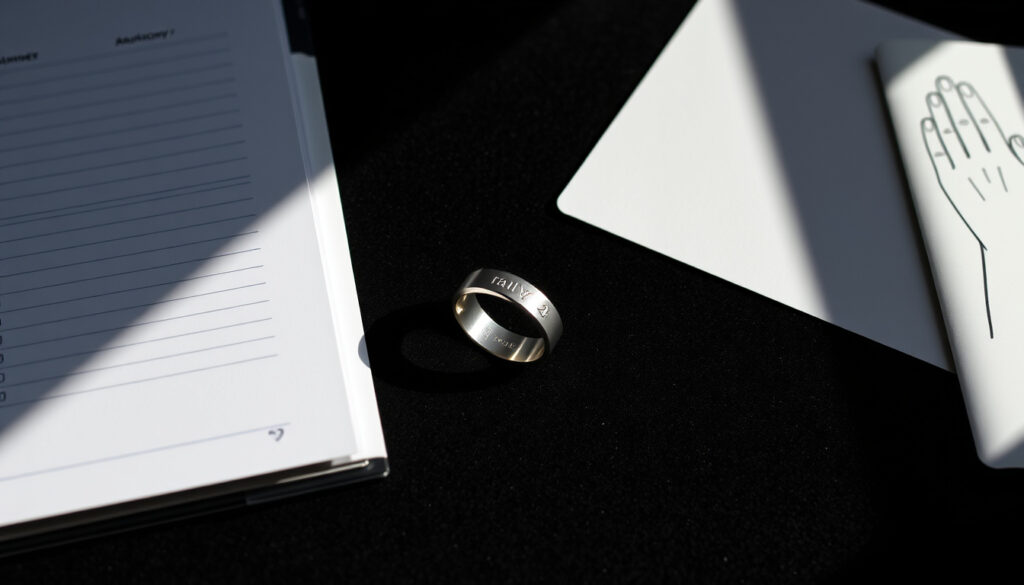
Silver Ring Guide: Cost, Daily Wear & Which Finger
Anyone who’s ever bought a silver ring quickly discovers there’s more to it than just picking a pretty band. This guide cuts through the guesswork with concrete data, care advice, and cultural context so you can choose a silver ring that fits your hand, your budget, and your daily life.
Purity of Sterling Silver: 92.5% silver, 7.5% copper ·
Minimum Karat for ‘Silver’ in US: 92.5% (sterling) ·
Average cost of a men’s silver ring: $30–$150 ·
Average cost of a women’s silver ring: $20–$200 ·
Tarnish rate for 925 silver: Noticeable after 2–6 months without care
Quick snapshot
- 925 sterling is the industry standard for silver jewelry (U ARE Jewelry Guide)
- Pure silver (99.9%) is too soft for everyday ring wear (GIA 4Cs (gemological authority))
- Silver tarnishes naturally due to sulfur in air (Forai Jewelry Care Guide)
- Exact “lucky finger” varies by culture; no universal consensus
- Long-term resale value of non-designer silver rings is not well documented
- Silver ring tarnish is noticeable after 2–6 months without cleaning (Forai Jewelry Care Guide)
- Daily wear can reduce tarnish due to friction and skin oils (Janvier Jewelers Care Guide)
- Market shift toward sustainable lab-grown metals may affect silver pricing
- Brands increasingly offer nickel-free 925 alloys for sensitive skin
Five facts that together tell the full story of what a silver ring is worth — in money, durability, and maintenance.
| Fact | Detail |
|---|---|
| Sterling Silver Purity | 92.5% silver + 7.5% copper |
| Typical Ring Weight | 3–10 grams |
| Shelf Life Without Tarnish | 2–6 months average |
| Hypoallergenic Rating | High (nickel-free grade available) |
| Top Buyers | Women 25–45, gift buyers |
Which Finger Not to Wear a Silver Ring?
The ring finger and silver etiquette
In many Western cultures, the ring finger on the left hand is reserved for engagement and wedding bands. Wearing a fashion silver ring there can send unintended signals. According to the Chow Tai Fook Ring Wearing Guide (jewelry retailer), the ring finger carries strong romantic and marital connotations. If your goal is a casual or fashion-forward look, the index or middle finger is a safer bet.
Lucky fingers for wearing silver
- Index and middle fingers are widely cited in folklore as “lucky” for receiving energy.
- The little finger works well for signet-style silver rings without cultural baggage.
- Thumb rings can be comfortable but are less common — sizing can be tricky because the thumb base is wider than the joint.
The implication: if you are choosing a finger for your first silver ring, the index or middle gives you the most flexibility across cultures and occasions.
How Much Would a Full Silver Ring Cost?
Price range for sterling silver rings
Sterling silver rings span a wide price range depending on design and brand. Below is a breakdown of typical costs.
| Ring Type | Typical Price Range | Example Brands |
|---|---|---|
| Basic sterling silver band | $20–$50 | Etsy, local jewelers |
| Designer/branded (Tiffany, Pandora) | $50–$200+ | Tiffany & Co., Pandora |
| Heavy or gem-set silver ring | $100–$300+ | Solvar, Neville |
Three price tiers, one pattern: the majority of the cost is in craftsmanship and brand markup, not the silver itself. According to GIA 4Cs (gemological authority), budget is a key factor in choosing ring metal because different metals come at different price points.
Factors affecting price: weight, design, brand
- Silver weight: a 3-gram band costs about $2 in raw silver (spot price ~$0.70/gram) versus a 10-gram ring at ~$7 raw.
- Design complexity: hand-finished or engraved rings add 30–50% to labor cost.
- Brand markup: designer names add a premium of 3–5× over raw metal value.
The trade-off: you pay for artistry and brand, not metal content. A $100 silver ring contains roughly $4–$7 of silver.
Budget buyers should focus on small artisans or mass-market retailers (like Pandora), not luxury houses. A $40 band can last just as long as a $150 one if the silver purity is the same.
Which Is Better, 925 Silver or Pure Silver?
Hardness and durability
Pure silver (99.9%) is too soft for everyday ring wear — it bends and scratches easily. According to GIA 4Cs (gemological authority), sterling silver is softer than gold and platinum, so it is more prone to scratches and dents in daily wear. “925” sterling silver contains 7.5% copper, which makes it significantly harder. A standard scratch test places 925 at 2.5–3 on Mohs scale, while pure silver is just 2–2.5.
“Sterling silver is softer than gold and platinum, so it is more prone to scratches and dents in daily wear.”
— GIA 4Cs (gemological authority)
Five comparisons, one pattern: sterling loses on hypoallergenic purity but wins on every other practical dimension — especially durability for daily wear.
| Property | Pure Silver (999) | Sterling Silver (925) |
|---|---|---|
| Hardness (Mohs) | 2–2.5 | 2.5–3 |
| Daily wear suitability | Poor (too soft) | Excellent |
| Tarnish resistance | Slightly better | Moderate |
| Hypoallergenic | Excellent | Good (nickel-free grade available) |
| Cost per gram | ~$0.80 | ~$0.70 |
Five comparisons, one pattern: sterling loses on hypoallergenic purity but wins on every other practical dimension — especially durability for daily wear.
Tarnish resistance
Both pure and 925 silver tarnish when exposed to sulfur compounds in air. Sterling tarnishes slightly faster because the copper oxidizes. According to Forai Jewelry Care Guide, sterling silver naturally tarnishes over time when exposed to air and moisture. But wearing the ring regularly reduces tarnish due to friction and skin oils, per Janvier Jewelers Care Guide.
Hypoallergenic properties
Pure silver is more hypoallergenic because it contains no copper. However, most people tolerate 925 silver well. If you have sensitive skin, look for “nickel-free” or “hypoallergenic sterling silver” — many brands now offer copper-only alloys. GIA 4Cs (gemological authority) notes that skin sensitivities and comfort should be considered when selecting a ring metal for daily wear.
Why this matters: for the vast majority of daily wearers, 925 is the practical winner — it’s harder, cheaper per gram, and widely available. Pure silver only makes sense for special-occasion jewelry or those with severe metal allergies.
Upsides of 925 Sterling
- Harder and more durable for daily wear
- Lower cost per gram than pure silver
- Widely available and easy to find
Downsides of 925 Sterling
- Tarnishes slightly faster than pure silver
- May cause reactions in very sensitive skin (nickel-free options exist)
Is It OK to Wear a Silver Ring Every Day?
Durability for daily wear
Yes — 925 sterling silver is ideal for daily 24/7 wear due to its hardness. Simple silver bands and thin stackable rings are positioned as suitable for minimalist everyday wear, according to the U ARE Jewelry Guide. Low-profile designs without large stones or sharp edges are recommended to prevent snagging on clothing, per Fashion Week Online Styling Guide.
Maintenance and cleaning schedule
- Avoid wearing in chlorine (pools, hot tubs) or with harsh chemicals (Janvier Jewelers Care Guide).
- Remove during heavy manual work or exercise to prevent bending.
- Clean monthly with a silver-polishing cloth (John Hardy (luxury jewelry brand)).
- Store in an anti-tarnish pouch or cloth.
- Lotions, makeup, hairspray, and perfumes accelerate tarnishing — apply before jewelry (Janvier Jewelers Care Guide).
The pattern: daily wear is fine, but the ring is not indestructible. Treat it like a friend’s car — drive it daily but skip the off-road track.
Silver lovers who wear their ring 24/7: expect to polish it every 4–6 weeks. The good news? Regular wear actually slows tarnish because skin oils create a protective barrier. A ring that sits in a drawer turns black faster than one on your finger.
Is a 925 Silver Ring Worth Anything?
Resale value
925 silver has intrinsic scrap value based on the spot price of silver. An average ring of 3–10 grams holds about $2–$7 in silver content at current prices (~$0.70/gram). Retail price includes design, brand markup, and craftsmanship — resale is typically lower, especially for non-designer pieces.
Scrap value vs. retail value
The table below shows how much of a ring’s retail price is actually the metal.
| Ring Type | Retail Price | Scrap Silver Value | Resale Potential |
|---|---|---|---|
| Plain band (3g) | $20–$50 | ~$2 | Low |
| Designer brand (6g) | $50–$200 | ~$4 | Medium (brand name helps) |
| Gem-set or heavy (10g) | $100–$300+ | ~$7 | Medium (stones add value) |
Three tiers, one pattern: never buy a silver ring expecting it to appreciate. It is a wearable item, not an investment. Designer or gem-set rings can hold value better than plain bands, but the metal itself is rarely a store of value.
Why this matters: for buyers in markets like Ireland or the UK where VAT and import duties can inflate retail prices, understanding the scrap-to-retail ratio helps avoid overpaying for metal content.
Does 925 Silver Turn Black?
Tarnish science
Yes, tarnish (blackening) is a natural chemical reaction between silver and sulfur compounds in the air. The black layer is silver sulfide. Speed depends on environment — humidity, pollution, and exposure to household chemicals all accelerate it (Janvier Jewelers Care Guide).
Prevention and reversal
- Clean with a silver-polishing cloth — friction physically removes the tarnish layer (John Hardy (luxury jewelry brand)).
- Gentle method: white vinegar and baking soda paste (Janvier Jewelers Care Guide).
- Advanced method: baking soda + aluminum foil + boiling water — this reverses tarnish chemically without abrasion (Fink’s Jewelry Guide).
- Wearing regularly reduces tarnish due to friction and skin oils (Janvier Jewelers Care Guide).
“Wearing silver often can help keep it shinier because skin oils may slow the appearance of tarnish.”
— Janvier Jewelers
“925 sterling is the industry standard for silver jewelry.”
— U ARE Jewelry Guide
The trade-off: a ring that never tarnishes is a ring that’s never worn. A little blackening is normal; think of it as proof the silver is real.
Cheap silver jewelry may be silver-plated rather than sterling silver. A plated ring costs $5–$15 but the coating wears off in months, leaving a brass or nickel core. Check for a “925” stamp — that’s a reliable indicator of genuine sterling (U ARE Jewelry Guide).
finks.com, we-heart.com, classicdiamonds.co.uk, fashionweekonline.com, johnhardy.com, chowtaifook.com, reddit.com, reddit.com
For more detailed advice on pricing and daily maintenance, refer to this silver ring guide for comprehensive care tips.
Frequently asked questions
What is the difference between 925 and 999 silver?
925 sterling silver is 92.5% pure silver mixed with 7.5% copper for durability. 999 silver is 99.9% pure — too soft for daily jewelry wear.
Can I shower with a 925 silver ring?
It is not recommended. Chlorine in tap water and soaps can accelerate tarnish. Remove before showering or swimming.
Does silver turn your finger green?
Sometimes — but it is usually from copper oxidation (the copper in sterling reacts with sweat), not from the silver itself. High-quality 925 with proper alloying reduces this risk.
How do I clean a sterling silver ring?
Use a silver-polishing cloth for quick shine, or try the baking soda + aluminum foil + boiling water method for deep cleaning (Fink’s Jewelry Guide).
What is the best metal for a daily wear ring?
For most people, 925 sterling silver is the best balance of cost, durability, and comfort. If you have sensitive skin, choose nickel-free sterling or consider titanium (GIA 4Cs (gemological authority)).
Are there hypoallergenic silver rings?
Yes — many brands offer nickel-free 925 sterling silver. Pure silver (999) is also hypoallergenic but impractical for daily wear (GIA 4Cs (gemological authority)).
Related reading
- Chanel Bag Prices 2025: Cost, Cheapest Models & Countries — for luxury accessory buyers comparing silver rings to other personal items.
- Diptyque Perfume: Cost, Top Scents & Jo Malone Comparison — a parallel buying guide for those choosing high-end personal accessories.
Silver rings are not gold, and they are not platinum — but that is precisely their strength. For the everyday buyer, especially in markets like Ireland or the UK where sterling silver is widely available and affordable, 925 offers a practical, durable, and stylish option that costs a fraction of precious metals. The choice is clear: invest in a well-made 925 sterling band, clean it monthly, and wear it daily. Skip the pure silver unless it is a special-occasion piece — you will save money, avoid scratches, and still get the timeless look you want.
More related posts
 Kinsey Schofield: From Reality TV to Royal Reporter
 Michael Weatherly: Life, Career, and Controversies Explained
 Chad Warner: Salary, Partner, Contract & AFL Career
 Emma Memma: Why She Left The Wiggles, Wig & Husband
 INEOS Grenadier Price – 2025 MSRPs Trims Real Costs
 Crustless Quiche Recipe: Easy, Keto & Low-Carb Guide
 Cameron Brink: Injury, Engagement, Net Worth & Family Update
 Laurie Daley: Ethnicity, Wife, Children, Salary & Net Worth
