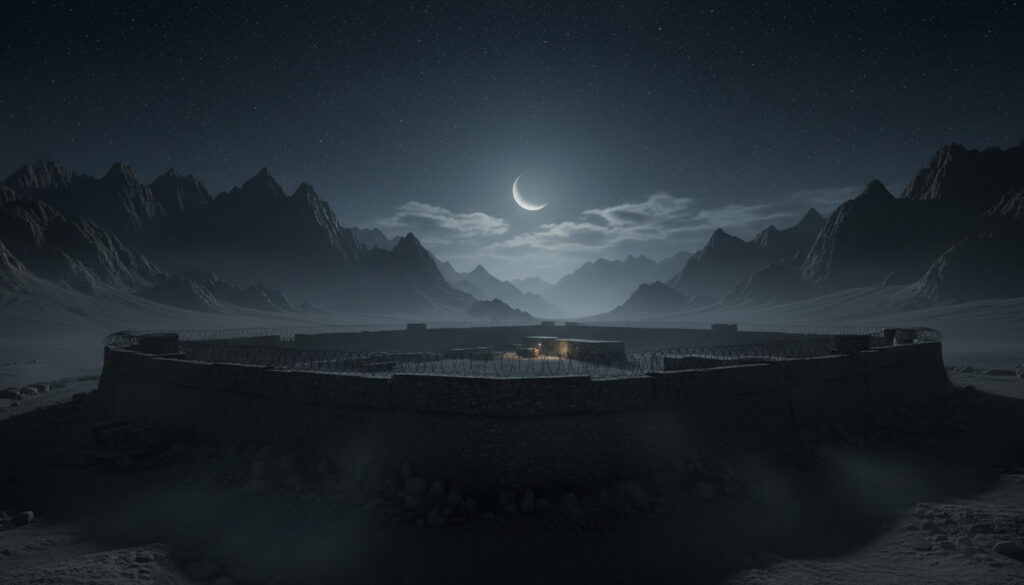
Zero Dark Thirty – True Story, Plot and Controversy
Zero Dark Thirty is a 2012 procedural thriller directed by Kathryn Bigelow that reconstructs the CIA’s decade-long hunt for Osama bin Laden. The film opens with audio from the September 11 attacks and follows analyst Maya, played by Jessica Chastain, as she navigates black sites, bureaucratic resistance, and the 2011 Navy SEAL raid on the Abbottabad compound.
Bigelow and screenwriter Mark Boal approached the material with a journalistic aesthetic, emphasizing the tedious grind of intelligence work over action spectacle. This stylistic choice generated significant controversy upon release, particularly regarding the film’s depiction of enhanced interrogation techniques and their efficacy in locating the al-Qaeda leader.
Despite taking creative liberties with specific events, the production maintained high fidelity to the operational timeline and military protocols. The film earned five Academy Award nominations and grossed $132 million worldwide, cementing its status as a definitive cinematic account of the post-9/11 intelligence apparatus.
What is Zero Dark Thirty About?
Key Insights
- Chronicles the CIA’s hunt for Osama bin Laden from 2001 through the 2011 Abbottabad raid
- Generated $132 million in worldwide box office receipts against a $40-50 million budget
- Received five Academy Award nominations including Best Picture and Best Actress
- Sparked a formal Senate Intelligence Committee investigation into its torture depictions
- Title derives from military slang indicating approximately 0030 hours, referencing the raid’s timing
- Utilized three separate full-scale reconstructions of the Abbottabad compound
Production Facts
| Budget | $40–50 million |
| Box Office | $132 million worldwide |
| Awards | 5 Oscar nominations (no wins) |
| Rating | R |
| Genre | Thriller / Drama |
| Writer | Mark Boal |
| Historical Basis | CIA hunt for Osama bin Laden |
| Release Pattern | Limited December 19, 2012; wide January 2013 |
The narrative structure follows Maya from her initial posting at a CIA black site in 2003, where she observes harsh interrogations of detainee Ammar, through the 2009 Camp Chapman suicide bombing, to her relentless pursuit of the courier Abu Ahmed al-Kuwaiti. Her investigation leads to the discovery of the Abbottabad compound and the subsequent authorization of the SEAL Team Six raid. Source
Is Zero Dark Thirty Based on a True Story?
The Operational Timeline
The film adheres to the broad historical arc of the CIA’s pursuit of bin Laden, which began immediately after the September 11 attacks and concluded with the May 2, 2011 raid. Bigelow and Boal conducted extensive interviews with intelligence personnel and military operatives to capture the institutional culture of the CIA’s Counterterrorism Center. Source
Specific operational details—including the use of stealth helicopters, the crash of one Black Hawk within the compound walls, and the DNA verification of bin Laden’s identity—mirror official accounts of the mission. The compound itself was rebuilt three times for the production: once in Jordan for exterior shots, once in India, and once on a soundstage for interior sequences.
Dramatized Elements
However, significant deviations from documented history occur throughout the narrative. The film suggests that intelligence obtained through waterboarding and other enhanced interrogation techniques directly led to identifying the courier who located bin Laden. Declassified documents and subsequent investigations confirm that detainees subjected to these methods provided no actionable intelligence regarding the courier’s identity or the compound’s location. Source
Additionally, the film portrays bin Laden as actively hiding within the compound, whereas intelligence suggests he may have been held under the protection of Pakistani intelligence (ISI). The cinematic depiction of a prolonged firefight also exaggerates the actual resistance encountered by SEALs, who faced minimal armed opposition.
The Senate Intelligence Committee’s 2014 report explicitly concluded that enhanced interrogation was ineffective in producing the intelligence that located bin Laden. The CIA itself admitted that traditional investigative work and a Pakistani informant’s tip—motivated by the $25 million reward—led to the discovery, not torture. Filmmakers possessed access to classified materials suggesting otherwise, but declassified documents released after the film’s premiere contradicted these claims.
What Does Zero Dark Thirty Mean?
The title derives from military slang referring to the hours between midnight and dawn, specifically approximately 0030 hours (12:30 AM). In the context of the operation, it denotes the timing of the SEAL Team Six insertion into Abbottabad, which occurred around 1:00 AM local time on May 2, 2011.
Beyond its temporal reference, the phrase carries connotations of the darkness and ambiguity surrounding covert operations. The terminology reinforces the film’s thematic emphasis on the shadowy, morally complex environment of post-9/11 intelligence work, where clear lines between acceptable methodology and abuse became obscured.
Who is Maya in Zero Dark Thirty and Key Cast?
The Protagonist
Jessica Chastain portrays Maya, a CIA analyst characterized by monomaniacal focus on locating bin Laden. The role earned Chastain an Academy Award nomination for Best Actress and established the character as one of cinema’s most memorable intelligence operatives. Maya functions as the audience’s conduit into the intelligence community, with the camera rarely leaving her perspective throughout the decade-spanning narrative.
Real-Life Counterpart
Maya represents a composite character primarily based on Alfreda Frances Bikowsky, a CIA counterterrorism analyst who played significant roles in black site operations and the Camp Chapman intelligence failures. Unlike the film’s solitary protagonist, the actual hunt involved extensive teams of analysts, with no single individual possessing the complete operational picture that Maya commands in the narrative.
The filmmakers consolidated multiple real analysts into Maya to streamline the narrative. While Bikowsky served as the primary inspiration, other CIA officers contributed to the character’s development. This condensation creates dramatic efficiency but obscures the collaborative reality of intelligence analysis, potentially overstating the role of individual operatives over institutional systems.
Supporting Cast and Direction
Jason Clarke appears as Dan, the interrogator operating at CIA black sites, while other SEAL Team Six members and CIA officials appear as unnamed or composite figures to protect operational security. Kathryn Bigelow directs, reuniting with The Hurt Locker collaborator Mark Boal to maintain their signature immersive, vérité style. Source
Bigelow and Boal utilized classified briefings and first-hand accounts from operatives who participated in the actual raid to construct the film’s detailed procedural elements. This access granted them insight into the specific tactics and equipment employed by SEAL Team Six, though it also led to accusations of improper collaboration with the CIA regarding the torture sequences. For those interested in the film’s cast and crew, Trafikolycka Örebro idag provides further details.
Timeline of Events: From 9/11 to the Senate Report
- : Terrorist attacks in New York and Washington initiate the CIA’s global hunt for Osama bin Laden.
- : Maya begins her assignment atCIA black sites where enhanced interrogation of detainee Ammar occurs (film timeline).
- : Suicide bombing at Camp Chapman kills seven CIA operatives, representing a significant intelligence failure depicted in the film.
- : Navy SEAL Team Six conducts the raid on the Abbottabad compound, killing bin Laden at approximately 1:00 AM local time.
- : Zero Dark Thirty receives limited theatrical release in the United States.
- : The Senate Intelligence Committee releases a report debunking the efficacy of enhanced interrogation in the bin Laden hunt, directly contradicting the film’s central narrative claim.
Established Facts vs. Dramatized Elements
| Established Information | Uncertain or Disputed |
|---|---|
| Osama bin Laden was killed on May 2, 2011, at the Abbottabad compound | Whether enhanced interrogation produced actionable intelligence on the courier |
| SEAL Team Six conducted the raid using two stealth-modified Black Hawk helicopters | The precise identity and number of CIA analysts primarily responsible for locating the compound |
| One helicopter crashed inside the compound walls due to aerodynamic complications | Whether Pakistani ISI officials protected bin Laden with knowledge of senior military leadership |
| The CIA maintained a $25 million reward for information leading to bin Laden | The extent to which detainees provided information before versus after harsh interrogation |
| Kathryn Bigelow and Mark Boal previously collaborated on The Hurt Locker | Maya’s final destination in the film’s closing scene, symbolizing post-mission isolation |
| The film recreated the compound three times for production purposes | Whether the “100% confidence” assessment reflected actual CIA certainty or mirrored pre-Iraq War intelligence failures |
For analysts interested in the statistical methodologies behind intelligence assessment calculations, consider reviewing How to Calculate Standard Deviation – Step-by-Step Guide with Formulas.
Cultural Impact and Political Backlash
The release of Zero Dark Thirty coincided with the 2012 presidential election and the first anniversary of the Abbottabad raid, immediately politicizing its reception. Critics from across the political spectrum debated whether the film constituted pro-torture propaganda or a neutral depiction of historical events. The controversy intensified when Senators Dianne Feinstein and John McCain wrote to Sony Pictures, condemning the film’s suggestion that torture yielded critical intelligence.
This backlash contributed to the film’s failure to win any of its five Oscar nominations, despite widespread critical acclaim for its craftsmanship. The debate resurfaced in 2014 when the Senate Intelligence Committee’s torture report confirmed that detainees provided no useful information on the courier’s identity while under enhanced interrogation, fundamentally challenging the film’s narrative thesis.
Despite these controversies, the film remains a touchstone for discussions regarding cinematic representations of classified operations and the ethical responsibilities of filmmakers portraying recent historical events. Its influence can be traced in subsequent intelligence procedurals and documentaries examining the War on Terror.
Sources and Official Statements
“Zero Dark Thirty has the facts wrong, and that’s a problem not just for the Oscars.” The film’s depiction of torture as pivotal to finding bin Laden contradicts the Senate Intelligence Committee’s findings and the CIA’s own admissions regarding the irrelevance of detainee information obtained through harsh methods.
Filmmakers cited access to classified CIA information and first-hand accounts from operatives involved in the raid. However, Obama-era officials disputed these claims, and subsequent declassified documents confirmed that traditional investigative work and a Pakistani informant’s tip led to the compound’s discovery.
Summary
Zero Dark Thirty stands as a technically accomplished but historically contested account of the CIA’s most significant counterterrorism success. While accurately portraying the raid’s mechanics and the institutional culture of post-9/11 intelligence work, its dramatization of torture’s effectiveness created lasting controversy that prompted congressional scrutiny. The film serves as both a document of its era’s moral complexities and a case study in the tensions between journalistic filmmaking and narrative convenience. For travelers interested in cinematic locations and accommodations, see Hotels in Sydney – Top Luxury Budget CBD Picks 2025.
Frequently Asked Questions
Did Zero Dark Thirty win any Oscars?
No. The film received five Academy Award nominations including Best Picture, Best Director (Bigelow), and Best Actress (Chastain), but did not win in any category. The controversy surrounding its torture depictions likely contributed to its lack of wins.
What was the production budget for Zero Dark Thirty?
The film utilized an estimated budget of $40–50 million, accommodating extensive location shooting in Jordan and India plus the construction of three full-scale replicas of the Abbottabad compound.
Is the CIA operative Maya based on a real person?
Maya is a composite character primarily inspired by analyst Alfreda Frances Bikowsky, though she represents the work of multiple CIA analysts. The real hunt involved teams rather than the solitary pursuit depicted in the film.
How accurate are the torture scenes in Zero Dark Thirty?
While the techniques depicted resemble actual enhanced interrogation methods used by the CIA, the film’s claim that these produced critical intelligence is disputed. The 2014 Senate report confirmed detainees provided no useful information on the courier while under torture.
What time does the title “Zero Dark Thirty” reference?
The title refers to approximately 0030 hours (12:30 AM) in military slang, referencing the nighttime timing of the SEAL Team Six raid on May 2, 2011.
Where was Zero Dark Thirty filmed?
Principal photography occurred in Jordan and India, with the Abbottabad compound reconstructed at three separate locations to accommodate different shooting requirements. No filming occurred in Pakistan.
More related posts
 Rick Harrison 2025: Net Worth, Wife, Court Case, and Death Rumors
 Sofia Boutella: Relationships, Career & Latest News (2026)
 Gold Coast Cyclone: 1954 Storm to Cyclone Alfred (2025)
 Rio Tinto Share Price: Forecast, Dividends & Analyst Views
 Au tralia A Cricket Score Today: Live Score & Schedule
 Lucy Liu Restaurant – Melbourne Location, Not Toronto
 Rodney Dangerfield: Bio, Tie Tug, and Comedy Legacy
 Division 293 Tax: Who Pays, How to Avoid, and How It’s Calculated
