Is Australia a Continent – Clear Facts and Explanation
The question of whether Australia is a continent sparks confusion for many learners and travelers alike. The short answer is yes—Australia qualifies as the world’s smallest continent under the most widely taught system, yet the topic involves nuanced geography, multiple classification models, and ongoing scholarly debate. Understanding why requires examining how continents are defined, how Australia fits those criteria, and how different regions and institutions approach continental boundaries.
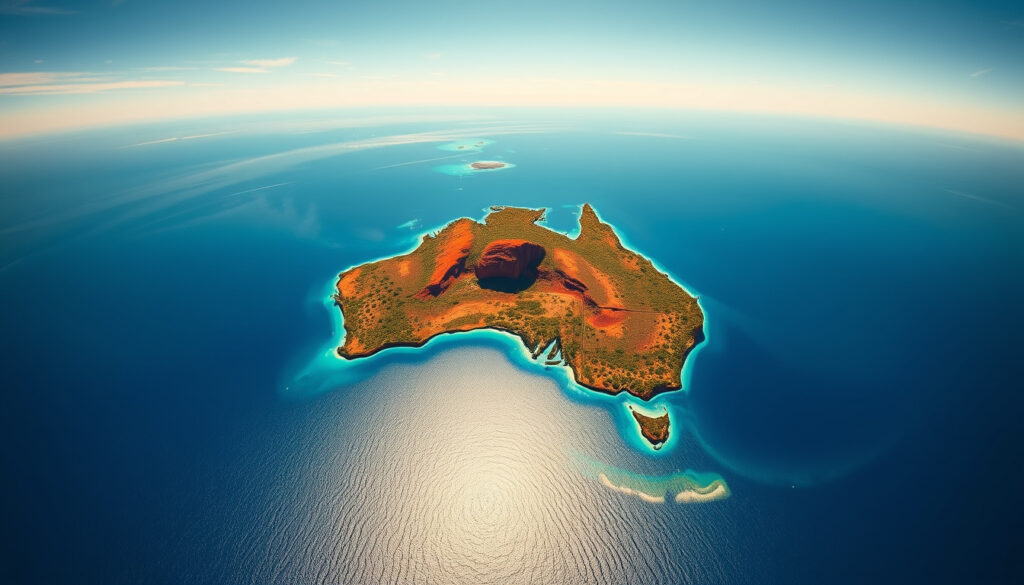
Geographically, Australia exists as a distinct landmass surrounded entirely by ocean, earning it the label “island continent.” This dual identity—as both a sovereign nation and a continental landmass—sets Australia apart from most other world regions. The distinction matters not only for educational curricula but also for how cartographers, geologists, and international organizations map and categorize the planet’s major land divisions.
This article breaks down the facts, clarifies common misconceptions, and explains why Australia holds its unique position among the world’s continents.
Is Australia a Continent?
Australia is indeed classified as a continent. In the standard seven-continent model used throughout most English-speaking countries, Australia ranks as the smallest of Earth’s seven major landmasses. The country of Australia occupies the vast majority of this continental territory, though the geological continent—sometimes called Sahul—also encompasses the island of New Guinea and Tasmania along with smaller nearby islands.
Key Facts About Australia’s Continental Status
- Australia qualifies as a continent under the seven-continent model taught in most schools worldwide
- The landmass sits on its own tectonic plate—the Australian Plate—distinguishing it from neighboring regions
- The continent hosts unique endemic species found nowhere else, including kangaroos, koalas, and Tasmanian devils
- Australia’s geological isolation over millions of years enabled distinctive evolutionary development
- The Sahul continental shelf once connected Australia to New Guinea during past ice ages when sea levels were lower
- Despite being surrounded by ocean, the landmass is classified as continental rather than oceanic
| Fact | Details |
|---|---|
| Continent Status | Yes (Australia) |
| Countries on Continent | 1 (Australia) plus New Guinea divided between Indonesia and Papua New Guinea |
| Population | Approximately 26 million |
| Continent Models | 7 continents (traditional); 6 continents in some European models |
| Tectonic Plate | Australian Plate |
| Full Sahul Area | Approximately 8.56 million km² |
Why Is Australia Considered a Continent?
The classification of Australia as a continent stems from a combination of geological, biological, and cultural factors that distinguish it from smaller landmasses. Unlike islands such as Greenland—which, despite its large size, sits on the North American tectonic plate and shares fauna with the Arctic region—Australia possesses its own distinct plate, endemic species, and Indigenous cultural history that together justify continental status.
Geological Criteria That Define Continents
Continents lack a strict scientific definition, but several characteristics help distinguish them from islands. The most widely accepted criteria include sitting on a separate tectonic plate, possessing substantial land area, and supporting unique flora and fauna shaped by geographical isolation. Australia meets all three criteria: it rests entirely on the Australian Plate, covers approximately 7.7 million square kilometers as a country (or 8.56 million square kilometers when including New Guinea and Tasmania under the Sahul definition), and evolved independently for millions of years, producing species found nowhere else on Earth.
The “Island Continent” Label
Australia’s designation as an “island continent” reflects its status as the world’s largest island while simultaneously meeting continental requirements. This paradox arises because size alone does not determine continent status. Greenland, for instance, spans about 2.16 million square kilometers—roughly a quarter of Australia’s continental area—and remains classified as the world’s largest island rather than a continent. The distinction lies in geological context: Greenland sits on the North American plate and shares biological characteristics with surrounding Arctic regions, whereas Australia possesses its own tectonic plate and evolved entirely distinct ecosystems.
The Sahul shelf refers to the continental shelf connecting Australia and New Guinea. During ice ages when global sea levels dropped significantly, this shelf emerged above water, physically linking what are now separate landmasses into one continuous land surface.
Australia vs. Oceania: Key Differences
Confusion often arises when comparing Australia to Oceania, with many assuming these terms refer to the same geographical region. However, they represent fundamentally different classifications with distinct boundaries and meanings.
What Is Oceania?
Oceania is a geographical region encompassing thousands of islands scattered across the Pacific Ocean. It includes nations such as New Zealand, Fiji, Samoa, Tonga, and Papua New Guinea, along with the continent of Australia. Organizations like the United Nations and some educational institutions use Oceania as a regional grouping rather than a continent in itself. The region spans from the Indonesian archipelago to the French territory of French Polynesia, incorporating immense cultural and geographical diversity.
Why Oceania Is Not Considered a Continent
Geographers classify Oceania as a region rather than a continent because it lacks the geological coherence that defines continental landmasses. The thousands of islands within Oceania sit on various tectonic plates or are volcanic formations, and they support vastly different ecosystems and human cultures. While Australia clearly meets continental criteria, the Pacific island nations collectively form a loose cultural and political association without shared geological foundations.
New Zealand’s Separate Continental Status
New Zealand notably does not belong to the Australian continent. The country sits on the submerged continent of Zealandia, which represents a largely sunken landmass separate from Sahul. This geological distinction means that from a strict geological perspective, New Zealand technically lies on a different continent than Australia, despite the nations’ close cultural and political ties through organizations like the Commonwealth and Five Eyes alliance.
Is Australia the Smallest Continent?
Australia holds the distinction of being Earth’s smallest continent by land area, though the precise measurement depends on which boundaries and definitions are applied. The continental landmass measures between 2.9 million and 8.56 million square kilometers depending on whether one includes adjacent continental shelves and islands.
Continental Size Rankings
When ranking the world’s continents by area, Australia sits at the bottom of the list, ahead of only Antarctica—which some models exclude due to its ice coverage. The seven continents in descending order by size are Asia, Africa, North America, South America, Antarctica, Europe, and Australia. Australia’s relatively modest footprint of approximately 7.7 million square kilometers for the country itself (or roughly 8.5 million square kilometers including New Guinea and Tasmania) makes it less than half the size of the next smallest continent, Europe.
The Seven-Continent Model
Most English-speaking countries teach a seven-continent model that recognizes Australia as a distinct landmass separate from Asia and Europe. This educational tradition stems from historical British cartographic standards and remains standard in schools throughout North America, the United Kingdom, Australia, India, and China. Alternative models exist: some European countries use a six-continent model combining Europe and Asia into “Eurasia,” while some South American nations combine North and South America. These variations highlight how continental classifications often reflect cultural and political perspectives rather than purely objective geological criteria.
According to Encyclopædia Britannica, Australia is “the smallest continent” and “the flattest and (after Antarctica) the driest.” This description emphasizes Australia’s physical characteristics relative to other continental landmasses.
| Continent | Approximate Area |
|---|---|
| Asia | 44.58 million km² |
| Africa | 30.37 million km² |
| North America | 24.71 million km² |
| South America | 17.84 million km² |
| Antarctica | 14.2 million km² |
| Europe | 10.18 million km² |
| Australia | 8.56 million km² (Sahul) |
History of Continent Definitions
The concept of continents has evolved significantly over human history, shifting from culturally-based divisions to increasingly scientific classifications. Understanding this evolution illuminates why Australia holds its current continental status.
- Ancient civilizations—Greek and Roman geographers recognized major landmasses but lacked systematic frameworks for classification
- 19th century—Formal recognition of Australia as a continent solidified as European exploration mapped the region’s full extent
- Early 20th century—Plate tectonics theory began reshaping understanding of geological boundaries
- Mid-20th century—Seven-continent model became standard in English-speaking educational systems
- Modern era—Ongoing debate continues regarding Oceania classification, with some institutions preferring regional over continental labels
The distinction between Europe and Asia—despite their physical connection across the Ural Mountains—illustrates how cultural and historical factors often outweigh purely geological criteria in defining continents. Similarly, the Australia-versus-Oceania debate reflects tensions between geological precision and practical regional groupings used by international organizations. For a detailed explanation, you can refer to our guide on 20 inches to cm conversion.
What’s Certain vs. What’s Debated
Established Facts
- Australia meets criteria for continent status in the seven-continent model
- The country occupies most of the continental landmass
- Australia sits on its own tectonic plate
- The continent features endemic wildlife shaped by isolation
- It is the smallest continental landmass by area
Points of Debate
- Whether to use “Australia” or “Oceania” as the continental label
- Whether to combine continents in six-model systems
- How to classify Zealandia (New Zealand’s continental home)
- Whether continental shelves should define boundaries
- How international organizations should group Pacific nations
Why This Classification Matters
The classification of Australia as a continent carries practical implications beyond academic debate. Educational curricula design geography courses around continental models, meaning students in different countries learn varying frameworks for understanding world geography. International organizations like the United Nations use regional groupings that may include or exclude Australia from various coalitions. Cartographers face ongoing decisions about map projections and labeling conventions that reflect these competing perspectives.
For travelers and learners, understanding Australia’s dual status as both country and continent helps contextualize its unique position in global affairs. The nation of approximately 26 million people occupies nearly all of the continental landmass, giving Australia one of the highest ratios of territory to population in the world. This geographic reality shapes everything from immigration policy to environmental conservation priorities.
The distinction also highlights how human cultural boundaries often diverge from geological realities. While continents represent large, distinct landmasses with unique geological characteristics, the words we use to describe them reflect centuries of evolving understanding, colonial history, and international convention.
What Authorities Say
“Australia, the smallest continent, is also the flattest and (after Antarctica) the driest. The continents show great diversity in their geological structure and physical geography.”
— Encyclopædia Britannica
“A continent is one of Earth’s seven main divisions of land. The continents are, from largest to smallest: Asia, Africa, North America, South America, Antarctica, Europe, and Australia.”
— National Geographic
Major reference works consistently classify Australia as a continent, providing authoritative support for the standard educational model. These sources emphasize Australia’s physical characteristics—its isolation, endemic species, and distinct tectonic setting—as justification for continental status.
Summary
Australia is definitively a continent under the seven-continent model used throughout most English-speaking countries. It qualifies through geological criteria including its position on the Australian Plate, substantial land area, and millions of years of evolutionary isolation producing unique endemic species. Simultaneously, Australia functions as a sovereign nation—the Commonwealth of Australia—unified under its own government since 1901. This dual identity as both country and continent distinguishes Australia from most other world regions and explains the initial confusion surrounding the question. Whether labeled as “Australia” or included within the broader regional designation of “Oceania,” the continental landmass remains Earth’s smallest and most isolated major land division. Understanding these distinctions helps clarify one of geography’s most frequently misunderstood classifications. Those planning to visit might explore Hotels in Sydney or learn about Australia’s Best Beach destinations to appreciate the continent’s diverse landscapes.
Frequently Asked Questions
How many countries are in the Australian continent?
The continental landmass of Australia contains one primary country—Australia—plus the island of New Guinea, which is divided between Indonesia and Papua New Guinea. Australia dominates approximately 85% of the continental land area.
What are the 7 continents?
The seven continents in descending order by size are Asia, Africa, North America, South America, Antarctica, Europe, and Australia. This model is standard in most English-speaking educational systems.
Is Australia bigger than Europe?
Yes, Australia is larger than Europe. The continent of Australia spans approximately 8.56 million square kilometers, while Europe covers about 10.18 million square kilometers—making Australia the smallest continent by area.
Why is Australia called the island continent?
Australia is called the island continent because it is entirely surrounded by ocean yet classified as a continent rather than an island. This designation applies because of its geological continental characteristics, including its own tectonic plate and endemic species.
What is the difference between Australia and Oceania?
Australia is a continent, while Oceania is a geographical region encompassing Australia plus thousands of Pacific islands. Oceania is not a geological continent; it represents a cultural and political grouping of diverse island nations.
Is New Zealand part of the Australian continent?
No, New Zealand is not part of the Australian continent. It sits on the submerged continent of Zealandia, which is geologically separate from the Sahul shelf that connects Australia and New Guinea.
What is the Sahul continent?
Sahul refers to the geological continent that includes mainland Australia, Tasmania, and New Guinea when sea levels were lower during ice ages. The Sahul continental shelf connected these landmasses into one continuous land surface.
More related posts
 Jack Nicholson: Health, Family Secret & Retirement
 3/8 to mm: Exact Conversion + Common Questions Answered
 Liza Koshy: Age, Ethnicity, Relationship, Net Worth & Career
 Lando Norris: 2025 F1 Champion Profile
 Kmart Flannelette Sheets: Sizes, Reviews & Care Guide
 Money Heist: Season 6, Cast Pay, Questions Answered
 Lawn Mowing Services – Costs and Schedules 2026
 ‘That’s So True’ Meaning, Lyrics & Versions by Gracie Abrams
