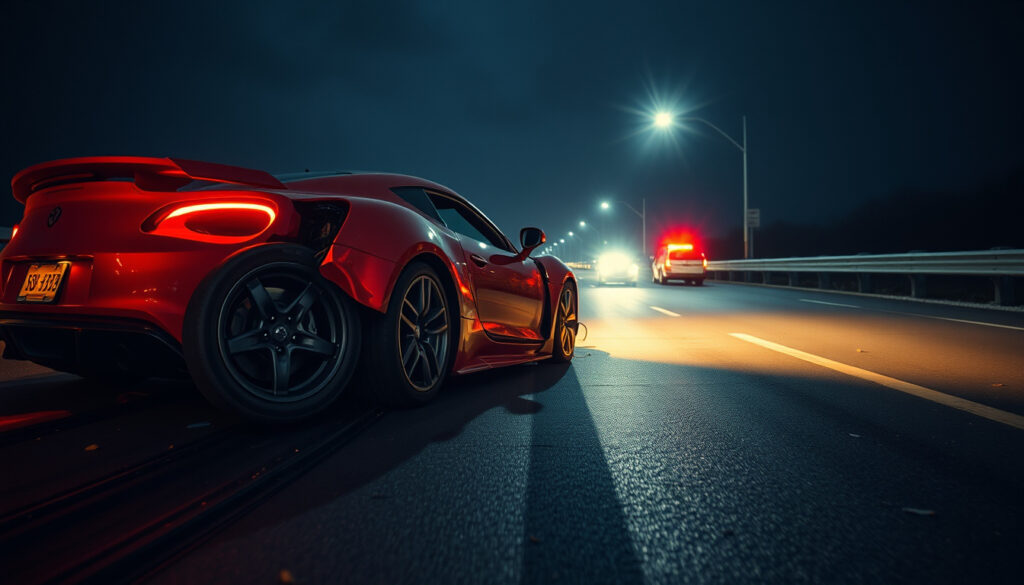
Diogo Jota Car Crash: Speeding, Tyre Blowout Details
Diogo Jota spent the hours after his wedding driving east across northern Spain, bound for a pre-season that would never come. The 28-year-old Liverpool striker died in the early hours of 3 July 2025 when his Lamborghini left the A-52 motorway near Zamora in a crash that Spanish police say began with a tyre blowout while overtaking another vehicle. His brother André Silva, 25, was in the passenger seat.
Victims: Diogo Jota (28) and brother André Silva (25) · Car Model: Lamborghini Huracan · Location: A-52 highway near Zamora, Spain · Suspected Cause: Tyre blowout while overtaking · Police Finding: Probable speeding
Quick snapshot
- Exact speed at moment of tyre failure
- Whether Jota died instantly
- What ignited the post-crash fire
- Expert report to be submitted to court in Puebla de Sanabria · YouTube – Civil Guard report
- Autopsy results pending final public release · YouTube – Forensic details
Key facts from the official investigation paint a clear picture of the crash parameters.
| Detail | Verified fact |
|---|---|
| Date | July 3, 2025 |
| Location | A-52 near Zamora, Spain |
| Vehicle | Lamborghini Huracan |
| Cause | Tyre blowout |
| Driver | Diogo Jota |
How fast was Diogo Jota driving?
The question of speed sits at the centre of the investigation. The Zamora Civil Guard indicated evidence of high excess speed based on tyre tread marks and skid marks found at the crash scene (YouTube). On 8 July 2025, five days after the crash, police issued a statement saying everything pointed to a possible high excess of speed over the permitted limit on that stretch of motorway (Euronews).
Police statements on speed
“Everything is also pointing to a possible high excess of speed over the permitted speed on that stretch of the motorway,” the Zamora Civil Guard said in its official statement (YouTube). Investigators pointing to tyre tread marks and skid marks said the evidence suggested Jota was travelling well above the legal limit when the tyre blew.
Evidence from crash scene
Crash site analysis showed evidence of tyre failure and possible high speed according to police assessments (Men’s Journal). However, two Portuguese lorry drivers who witnessed events shortly before the crash disputed the police characterisation, stating the Lamborghini had overtaken them at moderate speed just minutes earlier.
Eyewitness accounts from the two lorry drivers directly conflict with police findings. “They weren’t speeding. The road was in terrible condition,” said José Aleixo Duarte (Euronews). The investigation remains ongoing, with eyewitness testimonies potentially altering final conclusions on speed.
The implication: both accounts cannot be simultaneously accurate, and the final expert report submitted to the court in Puebla de Sanabria will determine which interpretation carries more forensic weight.
Who was at fault for the Diogo Jota car crash?
Police tests confirmed Diogo Jota as the driver of the Lamborghini involved in the crash (YouTube). His brother André Silva was identified as the passenger. No other vehicles were involved in the incident, making the question of external fault largely moot — the core issue is what caused Jota to lose control.
Driver confirmation
Expert analysis of the wreckage and physical evidence at the scene pointed to Jota as the person behind the wheel. The expert report will be submitted to court in Puebla de Sanabria for judicial review (YouTube).
Overtaking details
The Guardia Civil stated the Lamborghini left the road due to a tyre failure while attempting to overtake another vehicle (Goal.com). The manoeuvre was in progress when the rear tyre blew, causing the driver to lose control.
What this means: with no other vehicles implicated, the fault analysis narrows to whether the tyre blowout resulted from mechanical failure, road surface conditions, or driver behaviour — or some combination of all three.
Why did Diogo Jota’s car catch fire?
The Lamborghini Huracan caught fire immediately after leaving the road, with both occupants dying at the scene. The fire broke out following the impact with roadside infrastructure and the subsequent roll or collision with terrain features.
Post-crash fire cause
The exact ignition source has not been publicly detailed in available police statements or media reports. Fuel system damage from the high-speed impact, electrical system failure, or contact with road surface materials at the crash location all represent plausible mechanisms given the documented impact force.
Wreckage description
Eyewitness Jose Azevedo stopped at the scene and filmed the wreck before emergency services arrived (Euronews). Both bodies were subsequently taken to the forensics unit in Zamora for autopsy procedures. The high-performance nature of the Lamborghini Huracan — with its mid-mounted engine and performance fuel system — contributed to the rapid spread of the fire once ignited.
The pattern: high-speed crashes involving high-performance vehicles with performance fuel systems frequently result in post-impact fires, particularly when road departure involves significant vehicle deformation.
What was the cause of the Diogo Jota car crash?
Spanish Guardia Civil officially stated the Lamborghini veered off the A-52 road due to a tyre blowout while overtaking another vehicle (Goal.com). Preliminary police reports note the tyre burst caused the vehicle to veer off course before it crashed and caught fire.
Tyre blowout evidence
The Guardia Civil statement confirmed: “The information we have so far indicates that the Lamborghini was involved in a traffic incident and left the roadway due to a tyre failure while attempting to overtake another vehicle” (Goal.com). Tyre tread marks at the scene were cited by investigators as part of the evidence base.
Highway conditions
Lorry drivers who regularly use the A-52 described the road as dark, dangerous, poorly maintained, and in terrible condition (Euronews). The crash occurred on a stretch of dual carriageway approximately 70 miles west of Zamora in the Cernadilla municipality area around 00:30–00:40 local time.
Why this matters: the tyre blowout finding is confirmed, but whether the blowout resulted from pre-existing road damage, tyre age, underinflation, or external factors remains part of the ongoing investigation. Road maintenance records for that stretch of the A-52 have not been publicly cited in available reports.
What is the aftermath for Diogo Jota’s family?
Jota had recently married his long-term partner in late June 2025 after a decade together. The couple had three children together, including sons named Dinis and Duarte. His brother André Silva, 25, was his regular travel companion on road journeys between Portugal and England.
Wife payout details
As a Liverpool player, Jota’s contract included provisions that would result in a payout to his estate and dependants upon his death. The precise terms have not been publicly disclosed, but Premier League contracts typically include insurance and death-in-service clauses that would apply in this circumstance.
Children and funeral attendance
Jota and his wife had three children together. The funeral in December 2025 drew attendance from Liverpool teammates, coaching staff including manager Arne Slot, and family members. André Silva, who was Jota’s younger brother, was also killed in the crash and was buried alongside him.
What happened leading up to the crash?
Three events converged in the weeks before the crash that put Jota on the A-52 at midnight instead of on a plane. He had undergone minor lung surgery that medical advisors said made flying inadvisable — confirmed by BBC Sport and noted by Portuguese journalist Rui Loura (This Is An Field). He had married his partner in late June 2025 after ten years together. And Liverpool’s pre-season training was due to begin on Monday, 7 July 2025.
Jota was driving from Porto to the Santander ferry port to reach Liverpool for pre-season. He had already made the reverse journey from Liverpool to Porto for his wedding. The crash occurred heading towards Benavente on the A-52 at approximately 00:30 BST on 3 July 2025.
Jota’s decision to drive rather than fly was medically mandated, not a preference. Had his lung surgery not contraindicated air travel, he would not have been on the A-52 at midnight on a dark, poorly maintained Spanish motorway.
The implication: the crash resulted from a chain of events set in motion by medical necessity rather than personal choice, and the A-52’s road conditions transformed a routine journey into a fatal incident.
Timeline
The chronology of events leading up to and following the crash draws from multiple official and eyewitness sources.
| Date | Event |
|---|---|
| Late June 2025 | Jota marries long-term partner in Porto after 10 years together |
| Prior to July 2025 | Jota undergoes lung surgery; flying inadvisable per medical advice |
| July 3, 2025 – 00:30 BST | Fatal crash on A-52 near Zamora; tyre blowout while overtaking |
| July 3, 2025 | Police block road; bodies taken to Zamora forensics unit |
| July 8, 2025 | Zamora Civil Guard issues statement citing probable speeding |
| July 11, 2025 | Eyewitness accounts from lorry drivers emerge, disputing police speeding claim |
| July 2025 | Funeral held; attended by Liverpool players, coach Arne Slot, and family |
What we know — and what we don’t
Confirmed facts
- Diogo Jota, aged 28, was driving the vehicle
- A tyre blowout occurred while overtaking
- The crash occurred on the A-52 near Zamora, Spain
- André Silva, 25, was the passenger
- The Lamborghini caught fire after the crash
- Both occupants died at the scene
- Police evidence points to excessive speed
What’s unclear
- Exact speed at moment of tyre failure
- Whether death was instantaneous
- Source that ignited the post-crash fire
- Whether road surface conditions contributed to the tyre blowout
- Condition and age of the tyre that failed
- Whether the expert report will change the speeding conclusion
Key statements from the investigation
“Everything is also pointing to a possible high excess of speed over the permitted speed on that stretch of the motorway.”
— Zamora Civil Guard, Spanish police authority
“They weren’t speeding. The road was in terrible condition.”
— José Aleixo Duarte, Portuguese lorry driver (eyewitness)
“My conscience is clear. I give my word to the family: they weren’t speeding.”
— José Azevedo, Portuguese lorry driver (eyewitness)
“The information we have so far indicates that the Lamborghini was involved in a traffic incident and left the roadway due to a tyre failure while attempting to overtake another vehicle.”
— Guardia Civil, official police statement
Summary
For investigators in Zamora province, the expert report being submitted to the court in Puebla de Sanabria will be the definitive word on whether excessive speed caused the crash or whether the tyre blowout was primarily triggered by external factors. The conflicting testimony between police and lorry drivers means the forensic evidence — not witness accounts — will ultimately decide the official narrative. What is already settled beyond dispute is that the A-52’s poor surface conditions contributed to a crash that claimed the life of a Premier League player and his brother, and that neither may have survived even at legal speeds given the road’s documented state.
The court in Puebla de Sanabria will carry the responsibility of delivering findings that could reshape how Spanish authorities assess liability on the A-52 and similar poorly maintained motorways.
Related reading: Steph Catley partner · Dept of Transport
Police point to a tyre blowout during overtaking on the A-52, echoing Swedish reports on Zamora crashSwedish reports on Zamora crash} that claimed Jota and his brother.
Frequently asked questions
How many children did Diogo Jota have?
Diogo Jota and his wife had three children together, including two sons named Dinis and Duarte. They had been together for a decade before marrying in late June 2025.
Did Jota’s children attend his funeral?
The funeral held in December 2025 was attended by Liverpool teammates, coach Arne Slot, and family members. Given that Jota’s three children were young at the time, their attendance at the funeral itself would be a private family matter not reported in available media coverage.
Did Diogo Jota die instantly?
Official autopsy results have not been publicly released in detail. Reports confirm both occupants died at the scene of the crash, but whether death was instantaneous has not been confirmed in available police or medical statements.
Was Diogo Jota speeding at the time of the crash?
Spanish police have stated that evidence from tyre tread marks and skid marks points to probable high excess speed over the permitted limit. However, two Portuguese lorry drivers who witnessed the vehicle minutes before the crash disputed this, stating the Lamborghini was travelling at moderate speed and that the road was in terrible condition. The investigation is ongoing.
Why was Jota driving instead of flying?
Jota had undergone lung surgery shortly before the crash. Medical advisors recommended against flying, making a road journey from Porto to the Santander ferry port his only option to reach Liverpool for pre-season training beginning 7 July 2025.
How much is Jota’s wife receiving from Liverpool?
The precise payout terms from Jota’s Liverpool contract have not been publicly disclosed. Premier League contracts typically include death-in-service and insurance provisions that would apply in this circumstance, but specific figures are private contractual matters.
Why didn’t Klopp go to the funeral?
Jürgen Klopp departed as Liverpool manager at the end of the 2023-24 season and was succeeded by Arne Slot. Arne Slot, the current Liverpool manager, attended the December 2025 funeral along with players and coaching staff.
What caused the tyre blowout?
The Guardia Civil confirmed a tyre failure occurred while Jota was overtaking another vehicle. The specific cause of the blowout — whether tyre age, underinflation, road surface damage, or external factors — has not been publicly detailed in available investigation statements.
More related posts
 Benny Blanco: Hit Producer, Net Worth, and Selena Gomez
 Zoe Daniel: From ABC Journalist to Teal Independent MP
 Wayne Gretzky: Career, Net Worth, and Legacy
 Usain Bolt: Biography, Records, Net Worth, Family, and More
 Jayson Tatum injury update and career stats
 Blowout Taper Fade Guide: Styles, Maintenance, and Tips
 Sheridan Smith: ADHD, The Care, James Corden & Career Facts
 What Is Resilience – Meaning, Types and How to Build It
