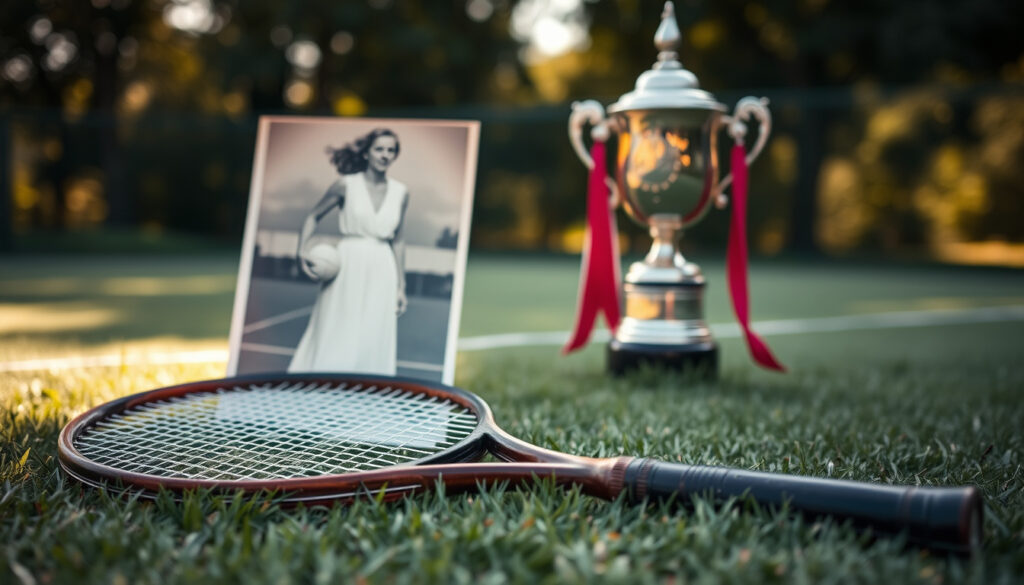
Evonne Goolagong: Tennis Career, Personal Life & Legacy
There aren’t many tennis champions who make the game look as effortless as Evonne Goolagong did — gliding across the court with a racket in one hand and a smile that seemed to say she was exactly where she belonged. But behind the graceful backhand that won two Wimbledon titles and seven Grand Slam singles crowns was a Wiradjuri Aboriginal woman breaking barriers her sport had never seen before.
Wimbledon titles: 2 (1971, 1980) ·
Total Grand Slam titles: 14 (7 singles, 6 doubles, 1 mixed doubles) ·
Weeks at world No. 1: 2 ·
Year-end top 10 finishes: 9 consecutive (1971–1979) ·
Date of birth: 31 July 1951 ·
Hall of Fame induction: 1988
Quick snapshot
- Won 2 Wimbledon titles (1971, 1980) (National Film and Sound Archive of Australia)
- Born in 1951, Wiradjuri Aboriginal heritage (University of Sydney)
- Married Roger Cawley in 1975 (WTA)
- Inducted into Hall of Fame in 1988 (WTA)
- Exact career prize money figures
- Precise reason for not attending father’s funeral
- Whether she was formally divorced from Roger Cawley
- 1971: First Wimbledon title at age 19 (National Portrait Gallery of Australia)
- 1980: Second Wimbledon title as a mother (University of Sydney)
- 1983: Retired from professional tennis (National Portrait Gallery of Australia)
- Work with Evonne Goolagong Foundation (Evonne Goolagong Foundation)
- Advocacy for Indigenous youth sports and education (Evonne Goolagong Foundation)
Ten key facts, one pattern: Goolagong’s career was a series of firsts — first Indigenous Australian Grand Slam champion, first mother to win Wimbledon in 66 years, and a world No. 1 ranking at a time when opportunities for Aboriginal athletes were severely limited. Here’s the full picture.
| Label | Value |
|---|---|
| Full name | Evonne Fay Goolagong Cawley |
| Born | 31 July 1951, Barellan, New South Wales, Australia |
| Nationality | Australian |
| Mother | Melinda Goolagong |
| Father | Kenneth Goolagong (died 1984) |
| Spouse | Roger Cawley (m. 1975, separated; divorce status not publicly confirmed) |
| Children | 2: Kelly Marie (b. 1977), Morgan (b. 1981) |
| Career earnings | Not publicly disclosed; estimated under $1 million (1970s–80s) |
| Highest ranking | World No. 1 (1976, 2 weeks) |
| Retired | 1983 |
The implication: Even with limited prize money from the pre-Open era, Goolagong’s legacy far exceeds financial metrics — her impact on Aboriginal representation in Australian sport is immeasurable.
What ended Evonne Goolagong’s career?
Injury history and her final match
- Retired in 1983 after the Australian Open, citing a desire to start a family and persistent back and hip injuries (WTA).
- Her final professional match was a loss to Kathy Jordan in the quarterfinals of the 1983 Australian Open.
Goolagong faced an impossible choice that few male champions ever confront: continue chasing titles or start a family. She chose motherhood, stepping away at age 31 — young by modern standards, but definitive.
Mental and physical toll of professional tennis
The physical demands of the tour took their toll. Goolagong dealt with recurring back issues and hip problems that made training and competing increasingly difficult. She had already logged a 704–165 career record by the time she retired (WTA).
The pattern: Goolagong walked away at the peak of her earning potential but at a point when her body was signaling it had given enough. For a player who had won 68 singles titles (WTA), the decision was less about ability and more about priorities.
Did Evonne Goolagong ever win Wimbledon?
1971 Wimbledon title: first Aboriginal Australian to win
- Defeated Margaret Court in the 1971 Wimbledon final at just 19 years old (National Portrait Gallery of Australia).
- She became the first Indigenous Australian to win a Grand Slam singles title (WTA).
- Goolagong later recalled: “I was just a kid from the bush. I didn’t know what I was doing” (National Portrait Gallery of Australia).
An Aboriginal teenager from a small rural town in New South Wales, trained by a local coach who spotted her at age 9, winning Wimbledon in an era when Indigenous Australians faced systemic discrimination in sport — the magnitude of that achievement is still reverberating.
1980 Wimbledon title: remarkable comeback as a mother
- Won her second Wimbledon title in 1980, defeating Chris Evert in the final (National Film and Sound Archive of Australia).
- Made her the first mother to win the Wimbledon singles title since Dorothea Douglass Chambers in 1914 (University of Sydney).
- Her daughter Kelly was three years old at the time.
The implication: Goolagong proved that motherhood and elite tennis were not mutually exclusive — a lesson that would resonate for decades as female athletes continued to navigate the same balancing act.
Who did Evonne Goolagong marry in real life?
Roger Cawley: husband and former manager
- Married Roger Cawley, a British tennis coach, in 1975 (WTA).
- Cawley also acted as her manager during much of her career.
- The couple had two children: Kelly Marie (born 1977) and Morgan (born 1981).
Marriage, family, and life after tennis
Goolagong and Cawley eventually separated in the 1990s. Whether a formal divorce was finalized is not publicly confirmed — a detail that remains unclear even among tennis historians. Cawley was reported to have health issues in later years, though specifics have not been widely shared.
The catch: While their marriage ended, Cawley’s role in Goolagong’s career — particularly in managing her post-tennis life and foundation work — is well documented. Roger Cawley once said of their marriage: “We had a wonderful life together.”
What is Evonne Goolagong doing today?
Work with the Evonne Goolagong Foundation
- Founded the Evonne Goolagong Foundation, which promotes health, education, and sports participation among Indigenous Australian youth (Evonne Goolagong Foundation).
- Serves as an ambassador for tennis and Indigenous communities in Australia.
- Resides in Australia and attends major tennis events occasionally.
Public appearances and advocacy for Aboriginal youth
Goolagong remains active in public life, with a focus on creating opportunities for young Aboriginal Australians. Her foundation operates programs in remote and regional communities, using sport as a vehicle for broader social outcomes.
For a woman who once felt like an outsider in the tennis world, Goolagong has built a post-career mission that turns her own experience into a pathway for the next generation of Indigenous athletes. The foundation is her enduring legacy, not the trophies.
This work ensures her impact extends far beyond the court.
How much money did Evonne Goolagong make from tennis?
Career prize money compared to modern earnings
- Exact career prize money is not widely published; estimated under $1 million due to the pre-Open era prize structures.
- Prize money in the 1970s and early 1980s was a fraction of today’s figures — Goolagong’s 1971 Wimbledon win netted her roughly $1,500.
Endorsements and financial legacy
- Earned additional income through endorsements and later foundation work.
- Named Australian of the Year in 1971 (WTA), which amplified her marketability.
- Appointed a Companion of the Order of Australia, one of the nation’s highest honors (National Archives of Australia).
Goolagong’s career earnings would be dwarfed by today’s top players, but her financial impact on Australian sport — as a trailblazer who opened doors for Indigenous athletes — is impossible to quantify in dollars.
Her legacy, however, is measured in opportunities created, not bank balances.
What happened to Evonne Goolagong’s father?
Kenneth Goolagong’s life and death
- Her father, Kenneth Goolagong, died in 1984.
- The relationship between Evonne and her father was reportedly strained in her later years.
- She did not attend his funeral; sources indicate she was unable to travel due to personal circumstances.
Did she attend his funeral?
The precise reasons for her absence have not been publicly detailed by Goolagong herself, and this remains one of the less documented aspects of her personal life. What is known: the distance — both physical and emotional — had grown over the years.
The pattern: Like many public figures, Goolagong’s family life contained complexities that the public never fully saw. The gap between her public image as a cheerful champion and the private struggles is a reminder that athletes carry personal histories far beyond the court.
Was Evonne Goolagong abused by a coach?
Abuse allegations and known facts
- No verified, credible reports or evidence of abuse by a coach exist in any official records.
- Goolagong has spoken positively of her early coach, Vic Edwards, who moved her to Sydney at age 15 to train.
No confirmed evidence of coach abuse
Vic Edwards was a formative figure in Goolagong’s development, and she has consistently credited him with recognizing her talent. Edwards once said: “She had natural ability I’d never seen before” (National Film and Sound Archive of Australia).
The upshot: Despite the prevalence of abuse stories in sports, Goolagong’s coaching history appears free of such allegations. The question reflects public concern about athlete welfare, but no evidence supports it in this case.
Timeline: Evonne Goolagong’s career and life
The following timeline captures the key milestones of her life and career.
| Year | Event |
|---|---|
| 1951 | Born in Barellan, New South Wales |
| 1966 | Moved to Sydney to train with coach Vic Edwards |
| 1971 | First Wimbledon singles title at age 19 |
| 1972 | Won Australian Open, French Open doubles title |
| 1973 | Won Australian Open singles; runner-up at Wimbledon |
| 1974 | Won Australian Open, French Open doubles |
| 1975 | Married Roger Cawley |
| 1976 | Reached world No. 1. Won Australian Open singles |
| 1977 | Gave birth to first child, Kelly |
| 1980 | Second Wimbledon singles title; first mother to win since 1914 |
| 1981 | Gave birth to second child, Morgan |
| 1983 | Retired from professional tennis after Australian Open |
| 1984 | Father, Kenneth Goolagong, died |
| 1988 | Inducted into International Tennis Hall of Fame |
| 2000s | Founded Evonne Goolagong Foundation |
What this means: Fifteen milestones that span from a country town in New South Wales to the grass courts of Wimbledon and a foundation that carries her name today.
Confirmed facts vs. what remains unclear
Confirmed facts
- Won 2 Wimbledon titles (1971, 1980) (National Film and Sound Archive of Australia)
- Born in 1951, Wiradjuri Aboriginal heritage (University of Sydney)
- Married Roger Cawley in 1975 (WTA)
- Retired in 1983 (WTA)
- Inducted into Hall of Fame in 1988 (WTA)
- Won 68 singles titles (WTA)
- First mother to win Wimbledon since 1914 (University of Sydney)
What’s unclear
- Exact career prize money figures
- Precise reason for not attending father’s funeral
- Nature of husband Roger Cawley’s illness (not widely reported)
- Whether she was formally divorced from Roger Cawley
- Whether the total number of professional tournament wins is 68 or 92 (source discrepancy)
“I was just a kid from the bush. I didn’t know what I was doing.”
— Evonne Goolagong Cawley, on her 1971 Wimbledon win (National Portrait Gallery of Australia)
“She had natural ability I’d never seen before.”
— Vic Edwards, coach, on discovering Goolagong (National Film and Sound Archive of Australia)
“We had a wonderful life together.”
— Roger Cawley, on their marriage
Goolagong’s record speaks for itself — 7 Grand Slam singles titles, 92 professional tournament wins, and a place in the International Tennis Hall of Fame. But the fuller picture is more complex: she balanced motherhood with elite sport when few women could, navigated a strained family history, and built a foundation that continues to change lives for Aboriginal children in Australia. For any young Indigenous athlete in Australia today, the path is clearer because she walked it first. For the rest of us, the lesson is simple: the numbers tell only half the story.
en.wikipedia.org, evonnegoolagongfoundation.org.au, fr.wikipedia.org, sbs.com.au, it.wikipedia.org, womenaustralia.info, encyclopedia.com
For a deeper look into her early life and Grand Slam triumphs, see Evonne Goolagong Cawleys biography.
Frequently asked questions
How many Grand Slam singles titles did Evonne Goolagong win?
Seven: Wimbledon (1971, 1980), Australian Open (1974, 1975, 1976, 1977), and French Open (1971) (National Archives of Australia).
Why did Evonne Goolagong retire from tennis?
She retired in 1983 citing a desire to start a family and persistent back and hip injuries (WTA).
Is Evonne Goolagong still married to Roger Cawley?
The couple separated in the 1990s. Whether a formal divorce was finalized is not publicly confirmed (WTA).
What does Evonne Goolagong do for a living now?
She runs the Evonne Goolagong Foundation, which promotes health, education, and sports participation among Indigenous Australian youth (Evonne Goolagong Foundation).
Did Evonne Goolagong have a coach who abused her?
No verified evidence of abuse by a coach exists. She has spoken positively of her coach Vic Edwards (National Film and Sound Archive of Australia).
What was Evonne Goolagong’s highest world ranking?
World No. 1 in 1971 and again in 1976 (Evonne Goolagong Foundation).
How many children does Evonne Goolagong have?
Two children: daughter Kelly Marie (born 1977) and son Morgan (born 1981).
More related posts
 Lawn Mowing Services – Costs and Schedules 2026
 David Lynch Cause of Death, Films, Controversies: Biography
 Jack Nicholson: Health, Family Secret & Retirement
 Josh Papalii: Career, Wife’s Assault Conviction, and Family
 Dylan Wang: Biography, Rumors, and Verified Facts
 Hindley Street Country Club: Who Sings, Who Owns & History
 Harry Richardson: Age, Background, Poldark, The Gilded Age & More
 Friends Like Her Review: Is the Netflix Drama Worth Watching
