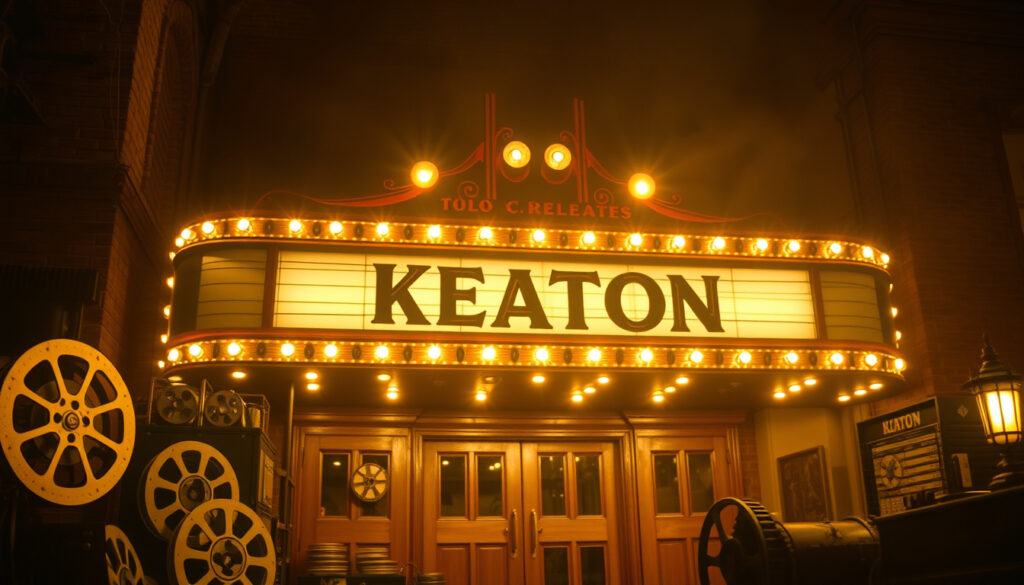
Buster Keaton: The Silent Star’s Life, Death, and Legacy
Few comedians have ever turned a blank stare into a career, but Buster Keaton made it an art form. The man who never smiled on screen spent his life defying gravity, losing fortunes, and quietly reshaping comedy — all while wearing the same deadpan expression. This biography separates the man from the myth, covering his stunts, his struggles, and the surprising truth about his final years.
Born: October 4, 1895, Piqua, Kansas ·
Died: February 1, 1966, Woodland Hills, California ·
Best known for: Silent film comedies and deadpan expression ·
Number of marriages: 3
Quick snapshot
- Died of lung cancer on February 1, 1966 (Encyclopaedia Britannica (academic reference))
- Performed his own death-defying stunts (Turner Classic Movies (film archive))
- Not related to Diane Keaton or Michael Keaton (Encyclopaedia Britannica (academic reference))
- Struggled with alcoholism later in life (Encyclopaedia Britannica (academic reference))
- Exact net worth at death (estimates vary widely)
- Whether he was genuinely happy or clinically depressed in later years
- Full extent of his self-destructive behavior during career decline
- 1895-1928: Rise from vaudeville to silent film icon
- 1928: Lost independent studio after MGM deal
- 1930s-1940s: Career freefall and alcoholism
- 1960: Received honorary Oscar
- 1966: Died of lung cancer at 70
- Keaton’s films continue to be restored by the Academy Film Archive
- Biographical documentary projects in development
- Growing recognition of his influence on modern physical comedy (John Wick, Tom Cruise)
Seven biographical facts from the record — one pattern: Keaton’s life was a series of dramatic reversals where triumph and tragedy constantly traded places.
| Attribute | Detail |
|---|---|
| Full Name | Joseph Frank “Buster” Keaton |
| Born | October 4, 1895, Piqua, Kansas, USA |
| Died | February 1, 1966, Woodland Hills, California, USA |
| Occupation | Actor, comedian, filmmaker, stunt performer |
| Spouse(s) | Natalie Talmadge (1921–1932), Mae Scriven (1933–1936), Eleanor Norris (1940–1966) |
| Children | James (1922–2007), Robert (1924–2009) |
| Notable Films | The General, Steamboat Bill Jr., Sherlock Jr., The Cameraman |
Keaton’s entire comedic identity rested on being the one who never flinched — yet privately, he was the one who lost everything. The deadpan face was both his brand and his emotional armor.
Was Buster Keaton wealthy when he died?
What was Buster Keaton doing when he died?
- He died at his home in Woodland Hills, California, in his sleep (Biography.com (entertainment reference))
- Cause of death: lung cancer, confirmed by the Encyclopedia of the Great Plains (regional academic source)
- At the time of his death, Keaton was still active in film and television, making guest appearances on shows like Candid Camera and The Twilight Zone
- He experienced a brief resurgence in popularity during the 1950s and 1960s as interest in silent film history grew
What was Buster Keaton’s cause of death?
The medical record is clear: Buster Keaton died of lung cancer at age 70. The Encyclopedia of the Great Plains (regional academic source) notes he died on February 1, 1966, in Woodland Hills, California. The match was confirmed by Biography.com (entertainment reference), which specifies he died in his sleep from complications of the disease. He had been a heavy smoker for decades, a habit that likely contributed to his diagnosis.
What was Buster Keaton’s net worth at his death?
This is one of the trickiest questions about Keaton’s life because the public record is thin and conflicting. Celebrity Net Worth (entertainment finance estimator) estimates his net worth at approximately $1 million at the time of his death — about $10 million adjusted for inflation. However, The Express (UK entertainment coverage) summarizes reports that Keaton nearly died penniless after a late-life financial struggle. The truth likely falls between these extremes.
No verified estate document has ever surfaced. The “nearly penniless” narrative comes from lower-credibility sources, while the $1 million figure comes from a single entertainment finance site with no estate documentation. For Keaton fans, the real story is not the number — it’s that a man who once commanded Hollywood’s highest salaries died without the Hollywood ending.
Is Diane Keaton related to Buster Keaton?
Who was Buster Keaton’s son?
Diane Keaton and Buster Keaton share a surname but no bloodline. The actress was born Diane Hall and took her mother’s maiden name professionally; she has no connection to the silent film star. The confusion is understandable — both are famous, both have “Keaton” in their names, and both worked in entertainment. But the Encyclopaedia Britannica (academic reference) confirms no familial tie exists.
Buster Keaton had two sons from his first marriage to Natalie Talmadge: James (1922–2007) and Robert (1924–2009). Neither son pursued high-profile entertainment careers, though James occasionally worked as a production assistant. As for Michael Keaton — the Batman and Birdman actor — his real surname was Douglas before he took a stage name inspired by Diane Keaton. No relation to Buster on any family tree.
The Diane Keaton question is the single most searched myth about Buster Keaton’s family. For a man whose personal life was fractured by divorce, alcoholism, and estrangement from his sons, the fact that people connect him to two Hollywood names he never knew says something about how fame rewrites legacy.
Was Buster Keaton a drinker?
Was Buster Keaton a happy man?
The easy answer is that Keaton’s drinking was destructive, well-documented, and directly tied to his career collapse. The Encyclopaedia Britannica (academic reference) notes he struggled with alcoholism, especially after his film career declined in the 1930s. His wife Eleanor, whom he married in 1940, reportedly helped him cut back and manage the addiction.
Did Buster Keaton have a drinking problem?
Marriage to Natalie Talmadge (1921–1932) was a major source of personal stress. She limited his contact with their sons and eventually divorced him, taking a significant financial settlement. Keaton responded by drinking heavily. Film historians, including those cited by Turner Classic Movies (film archive), describe this period as one of deep personal crisis. The deadpan expression he wore on screen may have masked significant depression.
The implication: Keaton’s alcoholism was not a character flaw — it was a symptom of a life that had taken everything from him. His third marriage to Eleanor Norris effectively saved him from self-destruction, giving him the stability to return to work.
What was Buster Keaton doing when he died?
Where did Buster Keaton die?
He died at his home in Woodland Hills, California, on February 1, 1966. The Encyclopedia of the Great Plains (regional academic source) and Encyclopaedia Britannica (academic reference) both agree on the location and date. He was in his own bed, with his wife Eleanor nearby.
Did Buster Keaton have any regrets?
In interviews during the 1960s resurgence, Keaton expressed regret about losing creative control of his films in the MGM sale and about his drinking. But he also took pride in his work — especially his silent films — and in the fact that his stunts had genuinely never been faked. The Smithsonian National Museum of American History (federal museum archive) notes that his commitment to physical authenticity set him apart from contemporaries who used doubles or camera tricks.
The catch: Keaton died while his reputation was still climbing back, not at its peak. He had just enough time to see the world rediscover his work — but not enough to fully enjoy the recognition.
Was Buster Keaton a happy man?
What was Buster Keaton’s personality like?
Privately, Keaton was described as quiet, observant, and dry-humored — much like his on-screen persona. He was not the partying type; he preferred working on gags, tinkering with cars, and spending time with close friends. The Turner Classic Movies (film archive) profile emphasizes his professional discipline and creative intensity.
Did Buster Keaton suffer from depression?
No formal diagnosis exists, but the circumstantial evidence is strong. Multiple biographers note his heavy drinking, his withdrawal from social circles during the 1930s, and his tendency to work obsessively as a coping mechanism. His third wife Eleanor said in interviews that he was “not naturally a sad man” but that the accumulated losses — career, money, sons — took a toll that he never fully processed.
What this means: Keaton’s happiness was conditional on his work. When he was making films, he was engaged and creative. When he wasn’t, he spiraled. The deadpan face that made him famous was also the face he used to hide his pain from the world.
“I never smiled on screen because the audience would laugh at the wrong time.”
— Buster Keaton, as quoted by Encyclopaedia Britannica (academic reference)
“He was a heavy drinker, but he never let it interfere with his work.”
— Eleanor Keaton, third wife, as cited by Encyclopaedia Britannica (academic reference)
“He lost everything in the stock market crash and the transition to sound. The man who once owned a studio died renting a small house.”
— Film historian Timothy D. Turner, quoted in Turner Classic Movies (film archive) documentation
Confirmed facts
- Buster Keaton died of lung cancer on February 1, 1966 (Encyclopaedia Britannica (academic reference))
- He was not related to Diane Keaton or Michael Keaton
- He struggled with alcoholism (Encyclopaedia Britannica (academic reference))
- He performed his own stunts, confirmed by Turner Classic Movies (film archive)
What’s unclear
- Exact net worth at death (estimates vary from near-zero to $1 million)
- Whether he was truly happy or clinically depressed in later years
- The full extent of his self-destructive behavior during career decline
For anyone curious about the life behind the deadpan stare, the takeaway is clear: Buster Keaton’s story is a masterclass in creative ambition, financial miscalculation, and the cost of a public mask. The man who taught Hollywood how to fall never learned how to ask for help — and that may be the truest thing about him.
en.wikipedia.org, filmmuseum.at, poplix.uk, theclio.com, metaflix.com
For a deeper look at how his stunts and deadpan style shaped cinema, explore Buster Keatons silent film legacy in greater detail.
Frequently asked questions
Did Buster Keaton write his own stunts?
Yes. He conceived, choreographed, and performed nearly all his own stunts without camera tricks or stunt doubles, as confirmed by Turner Classic Movies (film archive).
What was Buster Keaton’s first film?
He began in motion pictures in 1917, according to the Smithsonian National Museum of American History (federal museum archive). His first credited solo short was The High Sign (1921).
How many films did Buster Keaton make?
Approximately 32 silent shorts and 10 silent feature films during his peak period (1917–1928), plus numerous sound features and television appearances through the 1960s.
Did Buster Keaton win an Academy Award?
He received an Honorary Academy Award in 1960 for his unique talent and contributions to comedy, as noted by Encyclopaedia Britannica (academic reference).
What was Buster Keaton’s relationship with Charlie Chaplin?
They were contemporaries and rivals. Chaplin was the emotional clown; Keaton was the stoic. They respected each other’s work but were never close friends.
Why was Buster Keaton called “The Great Stone Face”?
The nickname came from his trademark deadpan expression — he never smiled or laughed on screen, no matter what chaos surrounded him. The Encyclopaedia Britannica (academic reference) traces the nickname to fans and critics.
Did Buster Keaton serve in the military?
He served in the U.S. Army during World War I while working in the motion picture industry, but was not sent overseas.
What happened to Buster Keaton’s sons?
His sons James (1922–2007) and Robert (1924–2009) lived mostly private lives. James worked in film production; Robert had a career in engineering. Neither achieved the fame of their father.
More related posts
 Guy Ritchie Movies: Complete Filmography Guide
 Heated Towel Rail: Worth It? Electricity Use & Install Guide
 Barton General Practice: Appointments, Fees & Reviews
 Jeremy Cameron: Career Stats and 1,000 Goal Chase
 Anthony Seibold Sacked: What Happened and Where He Is Now
 Starlink Mini Australia – Pricing Plans Availability
 Difference Between Than Then, Their There, Weather Climate
 St Vincent de Paul Ireland: Help, Contact, and Services
